 Blogcritics The critical lens on today's culture & entertainment
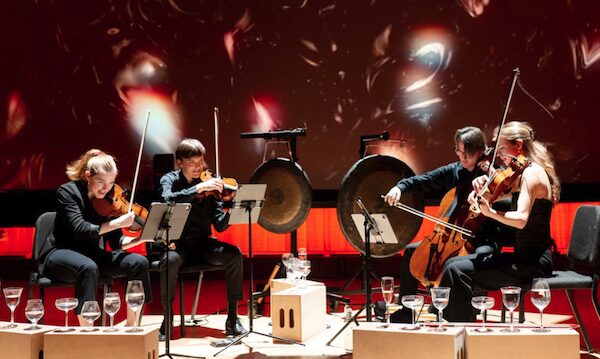
Curtis on Tour brings stellar concerts by Curtis Institute of Music students and faculty to venues around the world. Twentieth- and 21st-century repertoire from the Americas is the focus of “We the Artists,” the latest program from Curtis New Music Ensemble (CNME). In their debut at 92NY in New York City on Nov. 21, 2025, the group will perform music by Brazilian composer Clarice Assad, Russian composer Sofia Gubaidulina, and American composers Carlos Simon, Valerie Coleman, and Joan Tower.
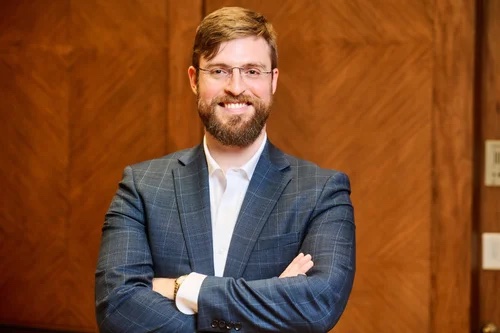
Curtis New Music Ensemble’s director is composer Nick DiBerardino, a Rhodes scholar who also serves as Provost and Dean of the Conservatory. He answered some in-depth questions for us about the ensemble and the program.
How and when did the New Music Ensemble originate, and how do you see its place in Curtis’ ecosystem?
At Curtis, we believe that music is a living tradition. The school’s commitment to conceiving classical music broadly – and to empowering our students to lead the future of our art form – makes it very natural to specifically highlight the music of our time on our CNME programs. CNME is a central feature of Curtis’ artistic curriculum, right alongside the Curtis Symphony Orchestra and Curtis Opera Theatre.
New music has been an important part of the Curtis learning environment since the very beginning. Samuel Barber was one of Curtis’ first ever graduates, and he wrote his famous Adagio for Strings while he was a student here. Gian-Carlo Menotti, Leonard Bernstein, George Walker, and Ned Rorem also studied at Curtis in its first few decades.
The process of learning new music has been a way for generations of Curtis performers to shape interpretation from the ground up, without reference to previous performances or recordings. Because new works have the capacity to speak directly to contemporary audiences about contemporary issues, they can also further Curtis’ goal of empowering our musicians to engage local and global communities through the highest level of artistry.
The first ever director of the Curtis New Music Ensemble was Don Liuzzi, the Philadelphia Orchestra’s principal timpanist. He founded the ensemble in 2006. David Serkin Ludwig then directed it for almost two decades, building partnerships that brought it to prominence on major stages. The group’s original name was “20/21 Ensemble,” which highlights that CNME is a vehicle for exploring the masterworks of the 20th and 21st centuries that allows our Curtis performers to engage with the cutting edge of contemporary artistry.
How did this program come together, and what does the title “We the Artists” mean?
Each year at Curtis since 2007, faculty leaders collaboratively choose a theme for an all-school project. We like to say these projects are interdepartmental, educational, and cultural extravaganzas, intensively exploring a theme simultaneously across the academic and performance curriculum. These projects allow our students to study a topic from different angles and become more well-rounded artists.
For this year and next year, our all-school project topic is “Bold Experiments: Reflections on Democracy and Music,” inviting students to consider democracy’s successes and failures along with its promises and dreams deferred. This idea was inspired by the U.S. semiquincentennial, which of course is keenly felt here in Philadelphia, and by the centennial of Curtis, which opened its doors in 1924. Our visionary founder, Mary Louise Curtis Bok, was born in 1876 during the country’s centennial. So we’ll also be celebrating her 150th birth anniversary and her lifelong commitment to developing musical leaders at Curtis who could “quicken the musical life of the country.”
This CNME program is a part of our all-school project. “We the Artists” is a take on “We the People” – the opening of the preamble to the Constitution. That preamble was written primarily by Gouverneur Morris, a Pennsylvania delegate to the 1787 Constitutional Convention held at Independence Hall in Philadelphia. “We the People” is one of the most resonant phrases in American culture. It indicates a mutual agreement by the American people about a vision for the country. “We the Artists” is a contemporary take on what the reality of our world looks like from different perspectives and experiences.
Democracy, like art, depends on a multitude of voices coming together in dialogue – and in pursuit of something larger than oneself. This program celebrates that spirit through works that give voice to a wide range of perspectives, identities, and traditions. In today’s world, where the idea of democracy feels both urgent and fragile, I can’t think of a more vital reminder of art’s power to help us listen, connect, and imagine new possibilities together.
The six movements of Clarice Assad’s “Canções da America” for string quartet encompass traditions from Uruguay, Paraguay, Bolivia, Argentina, and pre-colonial Andean culture. This sounds exciting, but also potentially confusing. How does the composer unify all of these fragments in one work?
Elijah Daniel Smith, a celebrated composer who is Curtis’ Manager of New Music Activities, is a key thought partner for me as we work together – and with other faculty members – to design programs for Curtis New Music Ensemble. As Elijah puts it, Assad really is “a master of blending different idioms, styles, and traditions.” Her language beautifully combines these distinct and recognizable musical traditions. Each movement of Canções da América draws from a different tradition, incorporating fragments and influences from its particular source of inspiration.
Throughout the piece, a folk-like lyricism runs as a thread, grounding the listener as Assad layers a rich tapestry of rhythms, harmonies, and colors above and beneath. She describes Canções da América as a “melting pot of cultures consisting of Europeans, immigrants, natives, and people from Africa,” and the result is music that is thrilling, lyrically beautiful, complex, and most impressively, extremely fun.
Carlos Simon’s Giants for woodwind quintet was inspired by five prominent Black Americans: Bessie Smith, Maya Angelou, Ronald E. McNair, Cornel West, and Herbie Hancock, only two of whom are/were musicians. How does Simon translate their achievements or personalities into music? Or are the references more abstract?
Translating anything into music is a personal, and artful, process – Simon himself would surely have something brilliant to say about how he thought about that part of his process. What he does share in his program note is that each movement of Giants is a tribute to one of five extraordinary Black Americans who shaped Simon’s compositional identity. Each movement represents what Simon calls “character studies of their works.”
I think the project here is likely less about translating any particular achievement than it is about paying tribute, and about capturing aspects of each distinctive personality in the character of the music.
Valerie Coleman’s Freedmen of the Five Civilized Tribes “honors the legacy of Native Americans and former African slaves (adopted into Native American tribal membership through emancipation or marriage), who traversed the Trail of Tears.” How is this complicated legacy expressed in the music? And aside from the composer herself being a flautist, does the fairly common instrumentation of flute, clarinet, violin, cello, and piano have a bearing on the music’s subject matter/inspiration?
I was talking over your thoughtful questions with Elijah, and he wrote back to me very eloquently. I’d like to share his response with you in full. As he puts it:
“The legacies that inspired Coleman’s piece are indeed extraordinarily complex and intertwined by generations of suffering and oppression that still have lasting and inescapable consequences to this day. There is, of course, an agonizing and tragic commiseration between the peoples that are at the core of this piece, but Coleman has found a way to showcase the hopeful prospect created by the coming together of these peoples.
Clearly audible is what Coleman describes as a ‘true merging of cultures’ that sometimes ‘clashed with aggression’ but more often were a ‘soulful exchange.’ The instrumentation of this piece is wisely used to represent that very exchange and converging [of] cultures that this piece honors. Coleman utilizes the coloristic variety that this type of chamber ensemble offers to portray the differences, similarities, interactions, and melding of the different histories that came together during this extremely dark chapter of America’s identity.”
Besides New York and at the conservatory itself, will audiences elsewhere get a chance to hear this program?
The concert at 92Y on November 21 will also be live-streamed, so audiences anywhere can attend. Streaming tickets are available via 92Y.
How do you personally find time and energy to direct the Curtis New Music Ensemble with all your other responsibilities? And is working with this ensemble especially rewarding?
I feel very fortunate to compose, teach, and collaboratively build programs at Curtis, a place that has always valued artist-leaders. For me, there is a real synergy between my creative life as a composer, the inspiring work of teaching Curtis students, and the contributions I’m able to make to the school’s collective artistic planning and curricular development efforts.
I am very lucky to work with an incredible team – I could not do the work of CNME without Elijah in particular and a great many other wonderful staff and faculty members. The enthusiasm and passion our students have for their art and for these concerts is always galvanizing.
Our CNME concerts at Curtis have been packed for the past few years. They sell out way in advance of the performances. That’s tremendously rewarding – it creates great energy for this music and for our students, and of course, our students and this music create great energy for our audiences, too. There’s nothing quite as special as hearing our Curtis musicians learn and then champion this compelling repertoire for an enthusiastic audience.
What’s next for the Ensemble?
On February 28, 2026 at the Philadelphia Film Center, Curtis Opera Theatre and Curtis New Music Ensemble are joining forces to present La Passion de Simone, a mesmerizing meditation on faith, sacrifice, and resistance by Finnish composer Kaija Saariaho (a former Curtis composer-in-residence) and librettist Amin Maalouf. Subtitled “A Musical Journey in 15 Stations,” this opera-oratorio explores the life and writings of Simone Weil, the radical French philosopher and activist whose pursuit of justice shaped 20th-century thought.
Each year, CNME also presents a portrait concert to celebrate the works of one of the great composers of our time. We’re able to invite that composer to Philadelphia as Curtis’ composer-in-residence to work with our Curtis composers and coach our performers as they prepare for an evening-length concert of our composer-in-residence’s works. This year, we are very excited to welcome Jessie Montgomery as Curtis’ composer-in-residence.
Our “Portrait of Jessie Montgomery” will be on April 4th at Curtis in Philadelphia. The performance is currently sold out, but tickets often do open up before the concert, so please join the waitlist on the concert page to be notified of ticket releases. If you’ve read this far, thank you – and I do hope to have a chance to meet you at a CNME concert soon.
CNME presents “We the Artists” at 92NY in New York City on November 21, 2025.