 Blogcritics The critical lens on today's culture & entertainment
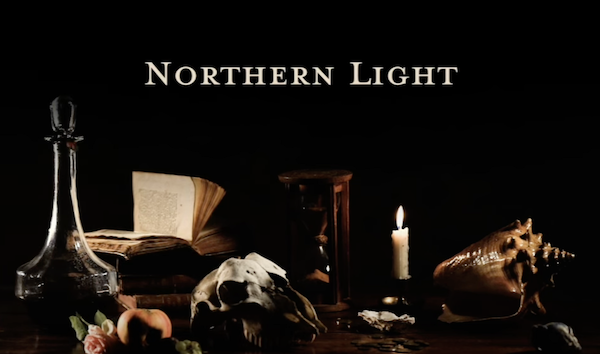
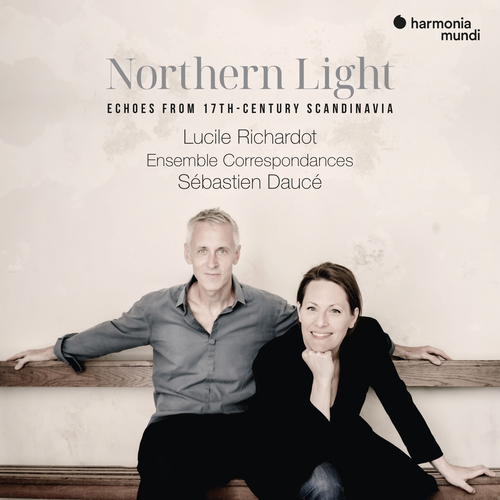
This exquisite new album unveils seldom-heard music associated with the court of Charles XI of Sweden, who reigned from 1675 to 1697. The superb mezzo-soprano Lucile Richardot collaborates with four other equally skilled singers and the musicians of Ensemble Correspondances, directed by organist Sébastian Daucé, on Northern Light, evocatively subtitled “Echoes from 17th-Century Scandinavia.”
Roaming Europe with Ensemble Correspondances
Why “Echoes”? Probably because this isn’t actually music by Scandinavian composers. It’s music that was featured at Charles’ court and sprang from the cross-cultural creative milieu of northern Europe at the time. The Swedish court was “a deliberate crossroads of European music and musicians,” as Huub van der Linden’s liner notes explain. It was a scene that gathered musicians from Germany, Italy, and France in a continuation of the internationalist practices of the famous Queen Christina. Nearly all the selections on this recording come from the manuscript collection of Gustav Düben, leader of the court chapel musicians, and his family.
Don’t be put off by the contemplative, even sleepy quality of the first five minutes. The track is by Franz Tunder, who was the organist of St. Mary’s Church in Lübeck. From its title, “Ack Herre, låt dina helga änglar,” you may recognize that this lyric isn’t German. It’s Swedish, and it’s an example of the songs and motets being modified to fit the occasion (and sometimes to make it less Roman Catholic). Tunder’s other contribution, the motet “Jubilate et exultate, vivat rex Carolus,” originally had German lyrics, but was refitted in Latin to celebrate the birthday of the Swedish king. It’s a work for all four voices singing like pealing church bells, and excited “Hallelujahs,” surrounding a somber bass solo and a soprano-alto duet.
Different moods emanate from other tracks. I’m entranced by the eerie, butter-smooth chromatic cadences of “Es war aber an der Stätte, da er gekreuziget ward” by Christian Geist, a German-born member of the Swedish court chapel in the 1670s. Likewise the catlike, understated “I frid vill jag nu fara” by Johann Krieger, another composition originally in another language, later rendered in the local vernacular.
The beautiful trio harmonies of “O Jesu mi dulcissime” are courtesy of Giuseppe Peranda, one of two Italian composers represented on the album. The other, Vincenzo Albrici, had been a travel companion of Queen Christina’s. But both composers had been attached to the Dresden court, another indication of cross-pollination in the 17th-century European music scene. Albrici’s motet “Cogita, o homo” includes a limpidly focused solo from bass Sebastian Myrus, just one of the exceptional singers on the recording.
Auditioning for the King
From there we jump to Johann Christoph Bach, an older cousin of Johann Sebastian’s. The famed organist is represented by a lament that was brought to Stockholm by a contemporary German countertenor, possibly as something like an audition piece.
A suite of instrumental dances by Sebastian Knüpfer shows off the skills of the musicians of Ensemble Correspondances (including a flutist who isn’t credited as such). It’s lovely to hear, from the fleet and pointed “Presto” to the slow and mournful Sarabande. But the instrumentalists’ mastery is evident in each note and chord of every one of the album’s 14 tracks. Listen, as just one of many examples, to the glorious bass notes of the organ and the wonderful richness of the strings in the dance suite’s “Allemanda.”
Recordings by Ensemble Correspondances, including most recently their album of Christmas music by Marc-Antoine Charpentier, have figured prominently in my personal early music playlist for years. The group is a French national treasure that remains at the peak of its powers. As beautifully produced an early music album as I have ever heard, Northern Light is out April 11 on Harmonia Mundi.