 Blogcritics The critical lens on today's culture & entertainment

The archlute and the chittarone (or theorbo) are large members of the lute family. Musicians in the 16th and 17th centuries commonly used them to accompany a singer or another instrument. The chitarrone also sometimes took a continuo role. But these were also solo instruments, and one musician continuing that tradition is Rolf Lislevand.
For his new album Libro Primo, the Norwegian lutenist recorded music by Johann Hieronymus Kapsberger and other Italian composers from the early-1600s movement known as the Camerata fiorentina. Most works come from the composers’ first printed books, hence the album’s title. The set also includes a piece of Lislevand’s own composition.
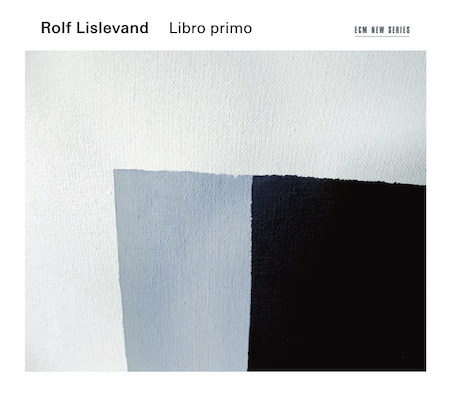
Lislevand makes this ancient music sound vital through a mature, distinctive, and warmly expressive sensibility, even as he explicates these old “texts” through a prism of meticulous technique. As an early-music aficionado I hear lutes and theorbos in concert fairly often, but hearing one of these larger lutes in a pristine studio recording is a rare pleasure. Even through my small computer speakers the sound is beautifully clear, note by note, and through my Airpods it’s excellent as well.
The ‘New Music’ of the 1600s
This lute music from the early Baroque period represents an important shift. Musicians and composers were deconstructing the polyphony that defined traditional Renaissance music in favor of monody (a solo voice with accompaniment), bold harmonic settings, and newly expressive rhythmic freedom – a style that came to be called the nuove musiche.
Despite its rather somber sound, the chitarrone/theorbo, with its extended neck and the close tuning of its many strings, was ideal for the new Baroque style. The archlute, typically tuned the same way as the Renaissance lute, has less versatility. But Lislevand believes players of the time likely tuned the instrument differently for different purposes, and he has re-tuned it for this project, giving it what he describes as an “adventurous timbre, more in line with the nuove musiche.” Indeed you’ll have to listen carefully to tell which instrument he’s using on which piece. (Hint: only the theorbo has those deep low notes.)
Lislevand’s adventurousness extends to working some inspired improvisation into some of these pieces, along with composing his own “Passacaglia al modo mio.” He describes the latter as his homage to the new-at-the-time passacaglia form, which became “a playground for experimenting with harmonic modulations and surprising melodic figures.” Not much is surprising about the melodies he interpolates into this relatively lengthy, partially improvised piece. But it’s a colorful tapestry, at times suggesting a Renaissance chaconne, and it works well as the centerpiece of the album.
Across the Centuries
None of the above history is in any way essential for enjoying and appreciating the beauty and intricacy of this music in Lislevand’s boldly expressive interpretations.

Some of his interpretations sound almost modern. The dizzying flurries of the “Corrente con le sue spezzate” by Bernardo Gianoncelli, for one. Also the free rhythms and wandering melodies of Kapsberger’s “Toccata quinta” and the dark, anxious half-dissonances of his “Toccata seconda arpeggiata.” Listen too to the psychedelic-style framing slow sections of the “Folias.”
In Lislevand’s hands the opening track, Kapsberger’s “Toccata terza,” sounds almost like a Spanish guitar piece. Crossing time even further, he finds parallels – very easy to hear – between the “Folias” and Diego Ortiz’s “Recerdada quinta” from the 16th century, one of two Ortiz pieces included for comparison.
Full of rich expressivity and gleaming virtuosity, Libro Primo from Rolf Lislevand is a beautiful listen. It’s also a valuable contribution to our understanding of music from a period that classical music presenters often overlook. It’s out August 29, 2025 on ECM.