 Blogcritics The critical lens on today's culture & entertainment

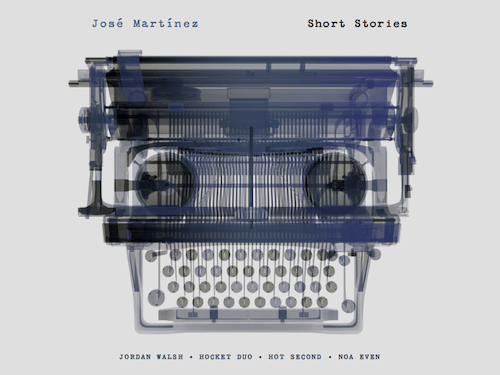
Short Stories is the first composer-portrait album from percussionist-composer José Martínez. It opens daringly with a long, subdued piece for bass drum, electronics, and quietly spoken word. I say “daringly” because this is the album’s least “accessible” piece. Martínez builds “Monologue V: Hidden Story” from strikes on the drum, pitchless electronic sounds, and, towards the agitated end, a fragmented recitation by the composer of a poem of his own composition.
Martínez writes that the piece is partly inspired by the batá drumming of Santería, whereby drummers speak directly to the Orishas solely with their instruments. It operates in a kind of minimalist space where meaning derives from the momentum of a (mostly) wordless conversation among sounds, instead of from melody, harmony, or rhythm. One can easily imagine the gods are listening.
Dancing with Myself
Listened to with generosity of spirt, “Monologue V: Hidden Story” can be trance-like. Not so with the nervous and nervy “Do I Regret?” This piece also features just one instrument, in this case the alto sax played by Noa Even (a member of New Thread Quartet). Partly improvised and alternately hesitant, melodic, and guttural, Even’s figures interact with electronically triggered echoes of themselves. Muted spoken words and electronic sounds intrude intriguingly. The conversation here is reflexive rather than with other beings; even the distorted spoken words sound like an internal argument with no resolution.
In the fifth minute a gurgling wind-like sound enters, creating tension as it rises chromatically. The saxophone reacts with tremolos and panicky meekness. Later, left to itself, the saxophone finishes plaintively and surrenders most of the final minute to softly whooshing electronics. The Orishas are nowhere to be found.
Two-piano Cumbia
The HOCKET Duo (pianists David Kaplan and Thomas Kotcheff) commissioned “Sinsentido del Absurdo” as a “reimagined soundtrack for Man Ray’s 1928 film L’Étoile de Mer.” The piece juxtaposes Afro-Colombian cumbia with the Dadaism of the film. It also samples the album Amistad by the Colombian American group Wache.
“Sinsentido” employs extended piano techniques (such as manipulating and playing the strings inside), improvisation, grooving rhythms, and folkloric elements. Some stretches are accompanied by a toneless shuffling rhythm achieved, I presume, by striking the piano’s exterior or interior architecture. Grooving, danceable sections and slow, airy expanses alternate, with a seeming randomness that suits the film’s Dadaism.
At first I questioned Martínez’s use of the word “absurd” in relation to this piece – what does it even mean to call music absurd? But I came to see what I think he means: Without structure, and with collage techniques patching together the various elements, where is meaning? If there is none, isn’t that sinsentido? absurd?
After some ghostly emanations and arpeggios, a last-minute callback to the opening piano riffs suggests structure, but it’s an illusion. It simply marks the end.
Do as I Say
The composer created for the album a version for instruments and electronics of his Instructions for Playing. Inspired by a similar-themed literary work by Argentinian writer Julio Cortázar, it purports to provide “instructions” for basic human activities: stargazing, running, singing, obstinacy, and crying. As such, it too has a whiff of the absurd about it. Its five short movements feature percussionist Rebecca McDaniel and violinist Dylan Feldpausch performing as the duo Hot Second.
While “Sinsentido del Absurdo” is the most interesting music on the album, I find Instructions for Playing the most evocative and arresting. The shifting sound-spaces of the material and the conceptual jostling between the programmatic and the meaningless create constant food for thought. And one thought triumphs: Meaninglessness is in the ascendent. Perhaps the tremolos and quietly resonant bell-tones of “Instructions for Stargazing” evoke a sci-fi movie soundtrack; but they don’t resonate with the idea of looking peacefully up into the heavens. Maybe the agita of “Instructions for Obstinacy” suggests the fits of a stubborn child, but such a child needs no instruction in behaving badly.
On the other hand, much of “Instructions for Running” do seem to be in a hurry, as is the movement itself, clocking in at under two minutes. And any sort of music could be considered “Instructions for Singing,” which is the most moody, evocative movement. In any case, the Instructions as a whole define a world of percussion that links uniquely with both recognizable and experimental violin techniques, adding up to a fascinating compendium of useless directions.
Coalescencia
Deriving unexpected sounds from acoustic instruments is one of Martínez’ favorite games. This in itself is nothing unusual. But he has his own carefully detailed artistic vision that’s consistent throughout the album’s different sound worlds. That holds for the final work. Martínez performs “Coalescencia” on the marimba de chonta – a traditional instrument associated with Afro-Colombian currulao music – and electronics.
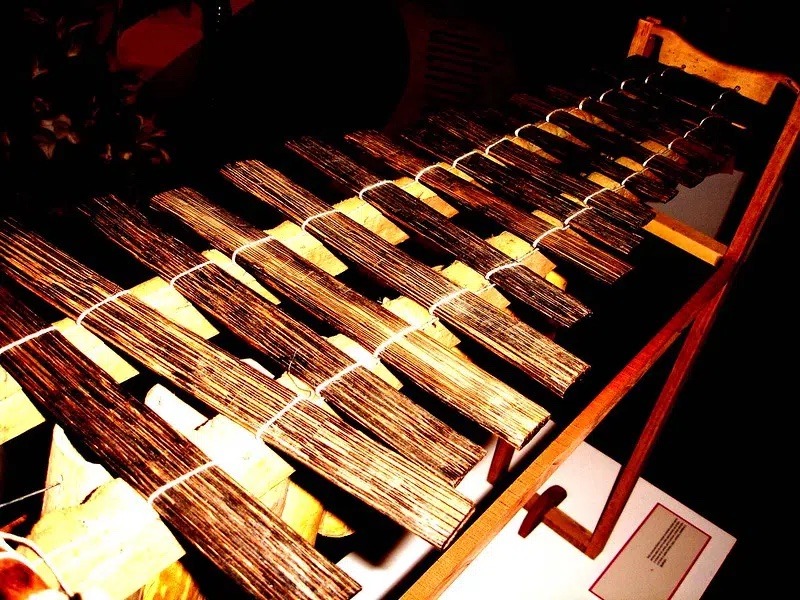
Contrary to the title of the album, the story he tells here isn’t short; though only 10 minutes long, the piece goes deep into its fusion of ancestral and contemporary musical traditions. Trance-inducing rhythms, detuned electronic manipulation, atonal cries from the subconscious – it’s a whirlwind and a world in one.
“Coalescencia” is a beautiful piece of work and a fitting conclusion to an album of inventive music that engages meaningfully with the composer’s heritage while pushing creative boundaries.
Short Stories from José Martínez is out now on New Focus Recordings and available at Bandcamp.