 Blogcritics The critical lens on today's culture & entertainment
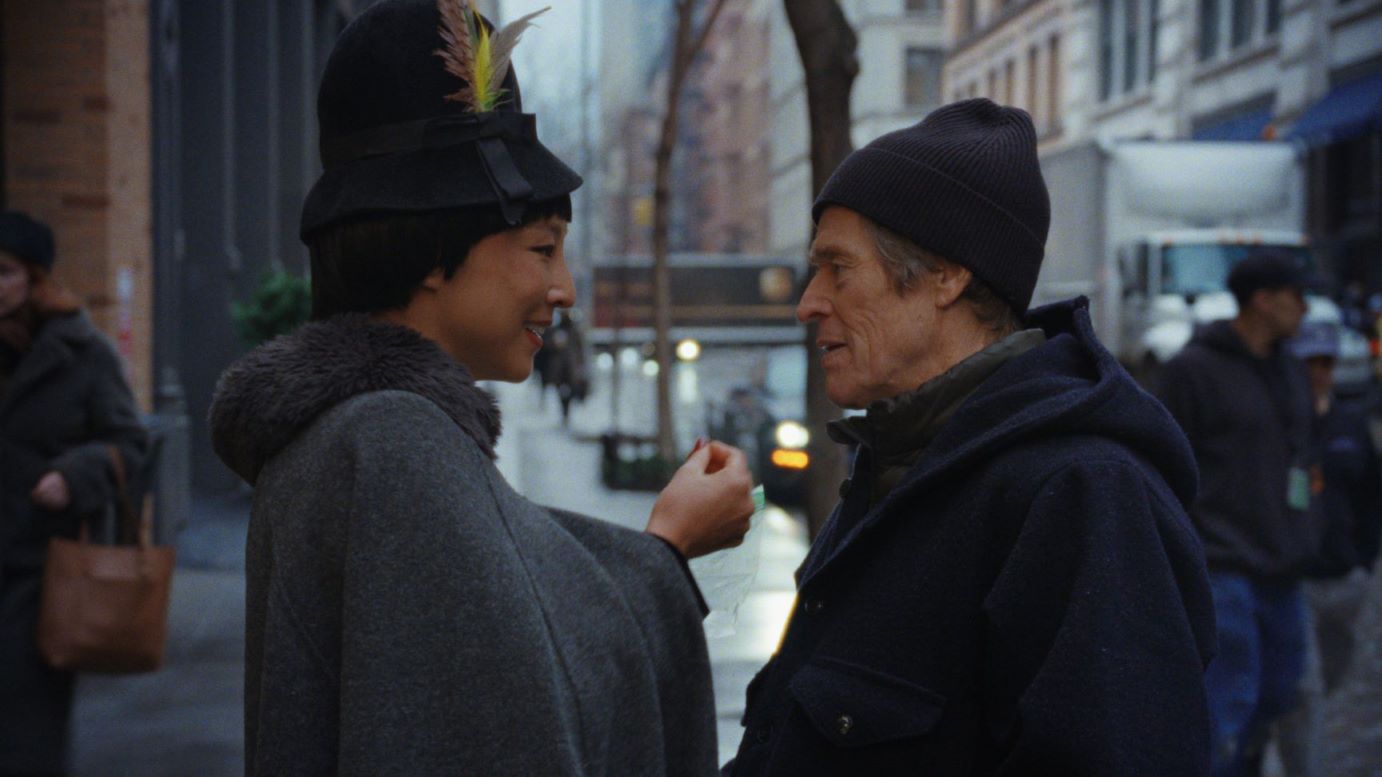
Late Fame with Willem Dafoe
Adapting the Arthur Schnitzler novella Late Fame, screenwriter Samy Burch (May/December) and director Kent Jones (Diana) shine a light on the West Village and Soho then (circa 1970s) and Soho now at the height of its commercialization and development. As a backdrop Jones uses the incredible factory buildings and West Village apartment buildings that have been turned into fashionista haunts. Whenever possible, he includes shots of cobblestone streets, which still create their old-world atmosphere. Against these settings a superb Willem Dafoe portrays the sensitive, once lauded poet Ed Saxburger.
Dafoe perfectly embodies the character. In his aging good looks we see the young man who had the world at his feet with the publication of his poetry book Way Past Go. However, he now works in the post office filing snail mail instead of writing. Did the penury of the poetic life motivate him to earn a modest living with a secure pension as a civil servant?
How long can artists live and produce without recognition?
Indeed, what happens to the passionate fire required to write poetry? Ed’s publication happens during a time when poetry was the lingua franca of the Village artist milieu. If old soldiers fade away, what happens to promising poets whose well-regarded work, little read, becomes forgotten?
Late Fame investigates this with atmosphere, humor, irony and heart. Jones’ love letter to a downtown Manhattan that has vastly changed reminds us of the area’s old beauties and once undeveloped glories. Like other artists in the 1960s through early 1980s, Dafoe’s Saxburger came to Manhattan, spurred by the electric community which commercialism eventually wiped away.
A Main Slate North American premiere
This engaging film is buoyed by sterling performances from those assisting Dafoe. The star easily inhabits his empathetic protagonist, a reserved, charming, stoic artist in a cringe-worthy job. No wonder Ed seems lost and questioning as he basks in flattery from a clique of well-heeled twenty-somethings trying to ride his former coattails of notoriety. They proclaim they intend to restore a literary past, but by the end Ed watches their unmasking as poseur artists, sorely out of their depth but nevertheless having heart.
Leader of an eccentric literary group that brands itself “The Enthusiasm Society,” effete Wilson Meyers (the excellent Edmund Donovan) gushes over Ed and invites him to join the group at a cafe. Meyers sees Ed’s poetry book as something like a museum piece around which to centers his exploitation.
Meyers cavalierly asserts the Enthusiasm Society’s purpose to “stand against negativity” and “the monetization of everything.” But when Ed gets to know this leader of retrograde misogynists and artistes, his proposed mission seems suspect. Humorously, the poseurs distance themselves from “the influencer culture, cellphone obsessed, technology maniacs.” These they excoriate, all the while imbibing the same waters, blind to their own hypocrisy.
The Enthusiasm Society: not poor or struggling like artists of old
When Ed visits Meyers’ stunning, unhip, technologically outfitted apartment in the Village, Meyers tells him his father bought it for him because room and board at NYU was more expensive. The group’s wealth places them far from the struggling, self-made artists whom they emulate. But Ed temporarily puts aside their hypocrisy and unawareness of self, drawn in by the allure of their youthful vibrancy. They suck him in with praise and blandishments.
Their earnestness could be worse. At least they aspire to be like legends of the past. That’s why Ed allows himself to get caught up in their artificial world. But the revelations come fast and furious after a poetic recital. The actors portray these fellows as an Oxford-like clique of callow, wannabe creatives, pretending to be literary sophisticates. They will never achieve what Ed did when critics celebrated him. He shone, if even if for a brief moment, before he extinguished the light by moving on.

A lone female artist
Though these are mostly male artists, they allow the actress and singer Gloria (a fine Greta Lee) to float among them as a girlfriend. Her flamboyance and mystery energizes Ed. As an older, wiser, struggling artist, Ed understands her day-to-day financial struggles. But she opportunistically exploits others, while Ed in his authenticity and truth avoids commercialism. He will not write his memoirs simply because Meyers thinks he should.
Cleverly, Jones features Gloria front and center during a performance of Kurt Weill and Bertolt Brecht’s “Surabaya Johnny.” Ed find this Sally Bowles-type chanteuse attractive, opaque and mysterious. During a brief scene they do drugs together and frolic down the streets in a nostalgic nod to the past.
The recital and afterward
Greta who is supposed to read poetry during the recital appears to be too overwrought to perform. However, she pulls through at the last minute stunning Ed, the Enthusiasm Society and the audience. Finally, Ed reads his own work beautifully. When an audience member references his age, albeit tucking it into a compliment, Ed feels humiliated. The shoutout reminds him that past glories can never return, even when celebrated by this ersatz glitterati. He lives in a desultory in-between.
Though Ed has a family back home and a brother dying, he ignores his sister’s phone calls to visit. Instead, he stays in New York, discounting the importance of family. Was there an estrangement? When Ed was a teenager and left his family to move to Manhattan, he made a new life for himself. Regardless of artistic success or failure, he never looked back.
In the present, his apartment filled with books reveals a rich inner life. Also, the group of working-class friends he plays pool with, who don’t know his poetic past or his literary interests, have helped him move on from his artistic purpose. We do note that he can’t write a new poem for the recital. Certainly his artistry has been put on indefinite hold. But it’s OK. Beyond these elements, this is a film about brief moments in time where the light shines and then dims only to shine once more before it goes out.
Jones’ work is noteworthy for the set design, cinematography and direction of stellar performances. Dafoe, who inhabits the role perfectly, is sensational. Lee and the others provide the foundation from which Dafoe seamlessly establishes this poignant and heartfelt character.
Tickets are still available.