 Blogcritics The critical lens on today's culture & entertainment
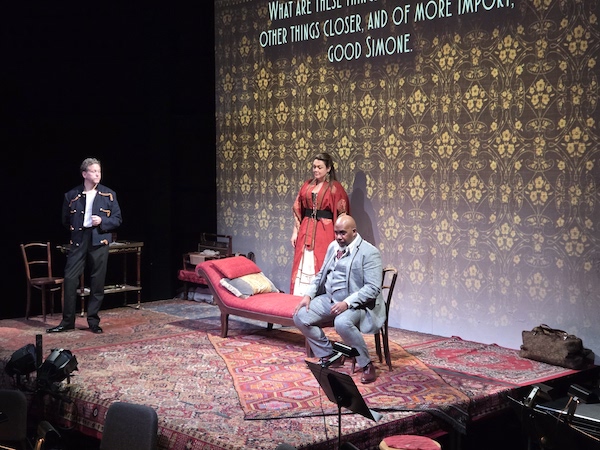
An ongoing revival of the music of Alexander Zemlinsky takes to the stage at BAM Fisher this weekend as the little OPERA theatre of ny delivers what it calls Zemlinskys Zimmer (in English, Zemlinsky’s Room). The production, built around the one-act opera Eine Florentinische Tragödie, op. 16, adds material from Zemlinsky’s vocal and instrumental oeuvre, and as such provides an excellent introduction to the Vienna-born composer for those who aren’t familiar with him. That group may include many opera fans.
Little, But Not Inconsequential
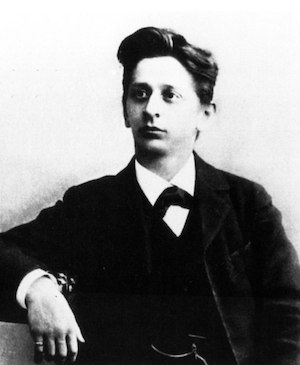
I last encountered the little OPERA company of ny at their American One-Acts, a bill of two short operas by William Grant Still and Kurt Weill. Like Weill, Zemlinsky, who was a generation older, fled the Nazi takeover and wound up in New York. But Eine Florentinische Tragödie dates from the time of the First World War, when Zemlinsky’s Jewishness (his mother was half-Jewish and the family had converted to Judaism) hadn’t gotten in the way of his success as a composer and conductor.
War does seem to lurk in the background in this curious little story of mistrust, betrayal and murder. The opera is based on Oscar Wilde’s unfinished, posthumously published play A Florentine Tragedy, with a German libretto by Max Meyerfeld. The English supertitles, rendered in florid period-poetic diction, display in oversized art-deco capital letters on a large backdrop that also shows eye-opening graphics.
The story follows Wilde closely. It’s simply this: Simone, a Florentine merchant, returns home after an unsuccessful venture to find his wife Bianca entertaining a prince named Guido Bardi. Learning of the guest’s nobility, Simone acts hospitable in hopes of selling the prince his fabrics, while disparaging Bianca and nursing a grudge against her and her lover both. Simone eventually challenges the prince to a duel, kills him, and reclaims the impressed Bianca’s affections.
The company opens the bill, however, with a lied for soprano and strings, “Maiblumen blühten überall,” a setting of a frightful poem by Richard Dehmal. Soprano Mary-Hollis Hundley (alternating with Sara Kennedy at other performances) is revealed reclining comfortably. The staging and music suggest a love song is in the offing. But as psychedelic batik-like graphics slide across the screen, she sings of her fading passion for her lover – and then, in increasingly surrealistic images, his horrible end as “the sun burned him to death in the corn.” It’s a gloriously gory piece.
Later I understood the song’s insertion. The role of Simone (baritone Eric McKeever, alternating with Daniel Klein) dominates the opera itself, which squeezes the other two characters into short recitatives and mini-ariosos. So this song gave us an additional chance to appreciate Hundley’s vocal prowess and charm (and thespian intensity).
A String Quartet for a Wandering Salesman
Next comes an excerpt from Zemlinsky’s String Quartet No. 2, Op. 5, featuring four of the chamber orchestra’s fine musicians. As a figure who we soon learn is Simone plods dejectedly in and out of sight with his case, like a Florentine Willy Loman, clever graphics (in opulent projections by Kylee Loera) show moving trolleys and pedestrians against still images of European streets and buildings – a church, a synagogue, a busy intersection. This instrumental interlude reveals the composer as a distinct and compelling voice in post-Romanticism. It serves well as part of the production’s mini-survey of his music.
Then tenor Michael Boley (alternating with Oswaldo Iraheta) gets his moment in the spotlight, with the lied “Lieve Schwalbe,” a carpe diem exhortation (“Up now, you sleeping lovers!”) with lyrics by poet Ferdinand Gregorovius. This selection from Zemlinsky;s Walzer-Gesänge nach toskanischen Volksliedern, a set of waltz songs based on Tuscan folk songs, is much cheerier than the soprano’s song, and it showed Boley’s sweet-serious tone and strong interpretive skills.
Full Force
The full chamber orchestra then assembles, led by Tiffany Chang. Roland Freisitzer’s new chamber orchestrations include standard instrumentation along with two keyboards, piano and celesta, the latter adding spacey faery-tale atmospherics. Beginning with a kind of alarum from the trumpet, the introductory music (overture is too strong a word) plunges into a heady brew of complex flowing motion and harmonization. While I was not familiar with this opera specifically, the orchestration sounds very much in the spirit of the works by Zemlinsky from this period that I do know.
Simone enters with the gloomy declaration that he has sold nothing. He finds his wife with the prince, whom he first takes (or says he takes) for an unknown kinsman. Learning of the guest’s nobility, he unctuously offers to sell him a fine damask, then a “robe of state,” and revels in the large sums the prince offers.
All the while, sexual tension and violent undercurrents threaten to surface. The direction by Philip Shneidman is good at playing this up without detracting from the glowing and well-modulated vocal performances. Simone bullies and verbally abuses Bianca. He suggests a playful duel which quickly becomes serious. Bianca urges the prince (in an aside) to kill her husband. But when her lover is bested and lies dead, Bianca suddenly sees Simone’s strength, and the spouses reunite lovingly.
Absurd, right? But this is opera, after all. And via Oscar Wilde at that. The story certainly bespeaks humanity’s cruel and insensitive side, and these are three unlikable characters. But the libretto leaves room for humor, and the staging takes advantage.
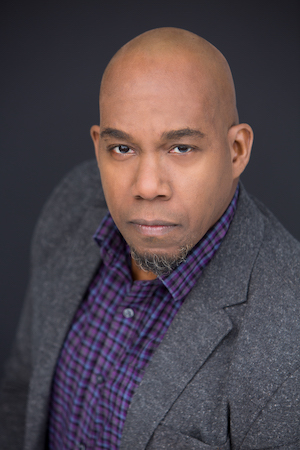
Key to the success of the performance I saw was McKeever’s essentially flawless portrayal of the cuckolded husband. His voice was sturdy and resolute in every part of its range. Even more important was his feel for the tricky music’s rhythmic and harmonic undercurrents. This depended, too, on the orchestra’s colorations and timing. Aside from a very occasional misaligned accent, the ensemble under Chang’s able direction performed admirably. Hundley and Boley were similarly good in their vocally smaller roles.
Unlike in the cases of some well-known émigré artists, the years Alexander Zemlinsky spent in the United States (his final ones, 1938 to 1942) weren’t happy or artistically successful, and he didn’t become well known here. The current revival is welcome and worthy, and this production ranks as a significant, and highly entertaining, contribution to it.
Zemlinskys Zimmer runs through June 8, 2025 at BAM Fisher in Brooklyn. Tickets are available at the little OPERA theatre of ny website.