Blogcritics The critical lens on today's culture & entertainment
Frantz Fanon’s The Wretched of the Earth (1963) remains a timely if not a prophetic work. Rather than focusing, however, on the well-renowned aspects of Fanon’s writing, his phenomenal command of detail, for one, or the depth of his analysis in the raw – aspects, in short, in which he clearly excelled – I’d like to draw the reader’s attention instead to what could be a lesser-known side of Fanon: as an abstract thinker in disguise.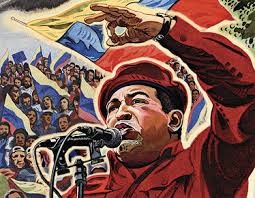
In this connection, I’d like to draw upon a couple of subthemes, both from the third chapter of The Wretched, “The Pitfalls of National Consciousness.” Let me state at the outset that neither theme is clearly articulated in any direct or immediate way; each is more or less embedded in the text, like an undercurrent. In the interest of space, I’ll concern myself here with Fanon’s views on economic development. The second undercurrent, concerning the unresolved tension between the universal and the particular, and more specifically, between the universal and the particular aspects of the human condition, will be taken up in the sequel.
The first subtheme, or leitmotif, emerges in the course of Fanon’s devastating critique of the postcolonial regimes; in particular, his critique of the bourgeois class which, even to this day, constitutes a formidable part of those regimes. In a nutshell, the critique runs as follows:
The bourgeoisie – and Fanon’s use of the term throughout his presentation is inclusive of the intelligentsia – have grown too accustomed to a life of privilege while serving the colonial powers in whatever administrative capacity, too addicted to that lifestyle to ever give it up and become instead a vanguard, the champion of the oppressed, this time while presiding over the critical transition period from the colonial to postcolonial home rule. Indeed, insofar as the indigenous people are concerned, the bulk of the populace which, as a matter of fact, has been exploited by and which has suffered under the colonial rule the most, their lot hadn’t changed all that much, if at all. Indeed, insofar as they are concerned, the old slogan, “Meet the new boss, same as the old boss!” could have been written in stone.
What of the subtext, however? Well, it’s pretty much a given in the form of Fanon’s more or less explicit assumption that it’s the bourgeois class, and no other, that, by virtue of its experience, education, whatever, is the most qualified to effect the necessary transition, end of story. His lament is that it failed to measure up to its inherent potential, that it sold out for the sake of personal gain; but his lament doesn’t alter his original conviction that for all intents and purposes, only the bourgeoisie can lead the emergent postcolonial nation-states to a life of political and economic independence.
How does this subtext play out on the stage of the 21st century geopolitical theater? Well, there is this nagging policy question concerning the diverse strategies which are available to non-Western, postcolonial nation-states as they go about trying to level the playing field in both the political and economic arenas. The nation-states which have spearheaded the so-called Bolivarian Revolution are a case in point. Consider.
There is no question that Venezuela, Bolivia and Ecuador are the most vociferous opponents of Western political and economic interests in South America. Inspired by the charismatic leadership of Venezuela’s late Hugo Chávez, the adjacent sister states have promptly followed suit with the likes of Evo Morales and Rafael Correa, each a strong populist leader in his own right. Moreover, the three states appear to have forged a coalition of sorts, not only in order to advance their own populist agenda but, just as importantly, to stave off, to the extent possible, Western interests in the region, U.S. interests in particular. That’s the essence of the Bolivarian Revolution in the making on both the domestic and international fronts; and with a little bit of luck, the chances are it may spread throughout the continent like wildfire.
What do we see, however, as we examine the manner in which these admittedly progressive, forward-looking states have gone about securing their economic independence? Not much new and different, I’m afraid! It would seem as though they’re all hell-bent on following the same old tired formula which, granted, had proven so successful in establishing Western political and economic hegemony worldwide, with the Industrial Revolution as the starting point. And you can’t really fault them for that. Still, considering that we’re talking about the most outspoken critics of capitalism, the main impetus, besides, behind colonization (and don’t forget now, mercantilism was a precursor of capitalism!), one would hope for something better or different, in any case something in a new key.
Fanon himself was rather ambivalent, if not conflicted, on the subject. In spite of his highfalutin rhetoric at the end of the last chapter of The Wretched – “For Europe, for ourselves, and for humanity, comrades, we must turn a new leaf, we must work out new concepts, and try to set afoot a new man” was his call to arms! – he was a conservative when it came to economic development. That’s one of the criticisms, in fact, that he launches against the postcolonial bourgeoisie: not being imaginative enough to carve out their respective countries’ futures in not following in the footsteps of their Western predecessors as the would-be captains of industry. They were too content to rest on their laurels, too complacent, venturing nothing and gaining nothing; personal enrichment, rather than risk and innovation, is all they were about. And the end result, naturally, was economic stagnation; in short, the perpetuation of the very same dependencies which had marked the colonial era, for that was the only way in which the postcolonial bourgeoisie had imagined themselves, serving as an intermediary between the colonial powers and the colonized. Hence, in spite of their de jure political independence, the postcolonial nations-states, in not charting their own economic futures, have remained Western economic colonies de facto.
There are two aspects to Fanon’s assumption on the subject of postcolonial economic development, and we had better distinguish between them. The first concerns the role of native bourgeoisie in the overall scheme of things; the second, the very nature as well as the course of economic development as such. In the first instance, we’ve seen that Fanon was rather partial when it came to the bourgeois class, imagining it, in spite of it having proven to be an abject failure in this instance or in that, as the end-all-and-be-all or, at any rate, as an indispensable catalyst to attaining any kind of economic progress or independence. I don’t think it would be an exaggeration to say that in Fanon’s view, the postcolonial nation-states had stood no chance of coming into their own unless the bourgeoisie was in the lead.
No question that Fanon was (unduly) influenced here by his own impeccable credentials and membership in that elite class. He was an intellectual first and foremost; consequently, it stands to reason that he’d espouse the virtues of the intellectual at all costs. Be that as it may, this remains the weak link in his chain of reasoning, especially since the recent history of a number of South American nation-states has proven him wrong. It’s arguable, in fact, that the very successes of the Bolivarian Revolution on the economic front have not come about as a result of native bourgeoisie involvement or prompting but in spite of it! – in spite, that is, of their best efforts to sabotage the process, to sabotage the laudable objective of attaining economic and political independence. The natives, and this certainly includes the indigenous folk of the region (aside from the natural-born leaders), have certainly proven to be quick learners, quite adept at picking up the slack Fanon had reserved for the bourgeoisie alone. If the conditions are right, they’ll always rise to the task, you can bet on it. Native ability, if the conditions are right, will always triumph.
Which brings us to the somewhat problematic aspect of Fanon’s two-pronged assumption, his ideas about economic development per se. We’ve seen that in spite of his protestations about turning a new leaf, setting afoot a new man, and so on, Fanon was thoroughly committed to the traditional, Western conception of economic development: What had worked so admirably for the West since the advent of the Industrial Revolution and on, surely must work, he figured, for the postcolonial nation-states as well, given that they’re no longer under the yoke of colonial rule and are therefore free to pursue their own economic independence and destiny. Naturally, there’d be a great deal of catching up to do, having been under the colonial thumb for some 400 years, a kind of process no different, really, from that of growing up, if you know what I mean. One thinks here of a child coming of age, of it struggling its way through puberty at first, then through adolescence, eventually to culminate in a full-blown adulthood, there being nothing mysterious about it, only a matter of ordinary honest-to-goodness human development, of maturation. We all do it as a matter of course, and with reasonable facility, one might add, without giving it a second thought, because it comes naturally.
Well, Fanon & company appear to have found a perfect substitute for the genetic script in the realm of the economic and the social: The postcolonial nation-states are no different, in effect, than children, wayward children or orphans, to be exact. So there’s no question that we’re dealing here with a “problem child,” a child that is in need of constant supervision, reassurance, and guidance. Even so, it is being assumed that barring any major DNA defects, the genetic code will eventually kick in and the child will be on her way.
Putting aside for now all questions concerning the validity of Fanon’s operative model, what I find perplexing about this aspect of his presentation, perplexing if only from a theoretical standpoint, is that the most vociferous critics of capitalism, Fanon included, apparently can do no better than to invoke the same old stale capitalist formula for economic development for the very nation-states that capitalism, under its many guises, had helped subjugate. Again, from the strictly purist, theoretical standpoint, alas, even an aesthetic one, one should hope for at least some articulation of an alternative theory of economic development, alternative, that is, to that which is being employed by the capitalists themselves. Well, it looks as though we’re in for a long wait, although in all fairness, the rock-bottom question is this: Can we arise like a phoenix and build upon the ashes or must we, if we’re keen on inventing a new future, resign ourselves to be working with old forms, however corrupt?
Be that as it may, there are also practical considerations which are pressing, pressing enough to trump anything else. Perhaps the exigencies of the moment, the dire need of catching up and leveling the playing field lest the emergent postcolonial nation-states be overrun both politically and economically and kept in subjugation, call for drastic measures, drastic enough to employ the very same rules of engagement that are so shamelessly employed by the enemy. Perhaps there’s no way to defeat the enemy other than by beating it at it its own game. Perhaps the very concept of “economic development” is a loaded one to begin with, making use of the capitalist notion of economic development as the end-all-and-be-all, which rigs the game, so to speak. Perhaps the very notion is way overrated, promising more than it can deliver. Perhaps it ought to be scrapped and done away with if we’re ever to see our way beyond this vicious circle.
However we may be inclined to respond to any of these questions, the fact remains that the postcolonial nation-states, indeed, even the most progressive of the postcolonial nation-states, have pursued this and no other course of action. And yes, I’m talking here even of Venezuela, Ecuador and Bolivia, the very nucleus of the much-heralded Bolivarian Revolution. Well, if the Bolivarian Revolution is supposed to stand for something, for anything, for a radical break with the past, and in particular, with the capitalist past and the capitalist ways of doing things, we’re yet to see in what respects ‘tis so. Thus far, it looks as though we’re witnessing but another experiment with socialism. Granted, it is being billed all ‘round as 21st century socialism, a kind of socialism, we’re led to believe, that is supposed to depart, and drastically so, from the 20th century Soviet model. And yet, one wonders in what respect the Soviets were in so different a predicament from the one which faces the progressive South American nation-states as they go about trying to carve out their political and economic futures. Both are and were engaged in a bitter dogfight with the West; both are and were fighting for their survival; both are and were on the brink of extinction.
But perhaps 21st century socialism carries a greater promise than its 20th century counterpart. For one thing, the logistics have changed. Today, no one any longer entertains any illusion about the West: It’s common knowledge by now that the West is corrupt to the core, that it’s only about endless conquest and acquisition, that its insatiable rapacity, its hubris, knows no limits. Consequently, the West no longer commands the kind of affinity and allegiance as when it confronted the budding Soviet Empire some hundred years ago or so, the idea being to bring it to its knees. The number of its die-hard supporters is dwindling, and rapidly. It is becoming, in fact, less and less fashionable to be siding with the West on ideological grounds, more and more in vogue to oppose it.
What’s the significance of this? Well, the end result could well be that the Venezuela-led coalition may yet garner considerable support from the international community, far greater, in any event, than that experienced by the then-solitary Soviets. It may yet emerge as a formidable opponent to the overreaching and overextended Empire, an equal or nearly-equal player in the region. In that sense, the Bolivarian Revolution may yet prove to be a success, but what of it? We’re still at the same old game of one power-center opposing another power-center, a capitalist bloc versus a socialist one. So unless Chávez-inspired 21st-century socialism will prove to be a bird of another feather, whereby the state will somehow transform itself and its citizens so as to inaugurate a brand-new set of social relations when it comes to production and distribution, relations that would be based on the spirit of mutual aid and willful cooperation, I’m afraid that history, along with its sordid lesson, is about to repeat itself.
Don’t get me wrong! I should think that almost anything would be preferable to a colonized mindset, even if it be supplanted by the orthodox socialist mindset. Having said that, however, the jury is still out as to whether the South American experiment with decolonization is the real McCoy when it comes to procuring a true revolutionary change or whether it’s just another version of capitalism dressed up in socialist garb.
I suppose the future will tell.