 Blogcritics The critical lens on today's culture & entertainment
It’s a Wonderful World, the Louis Armstrong Musical
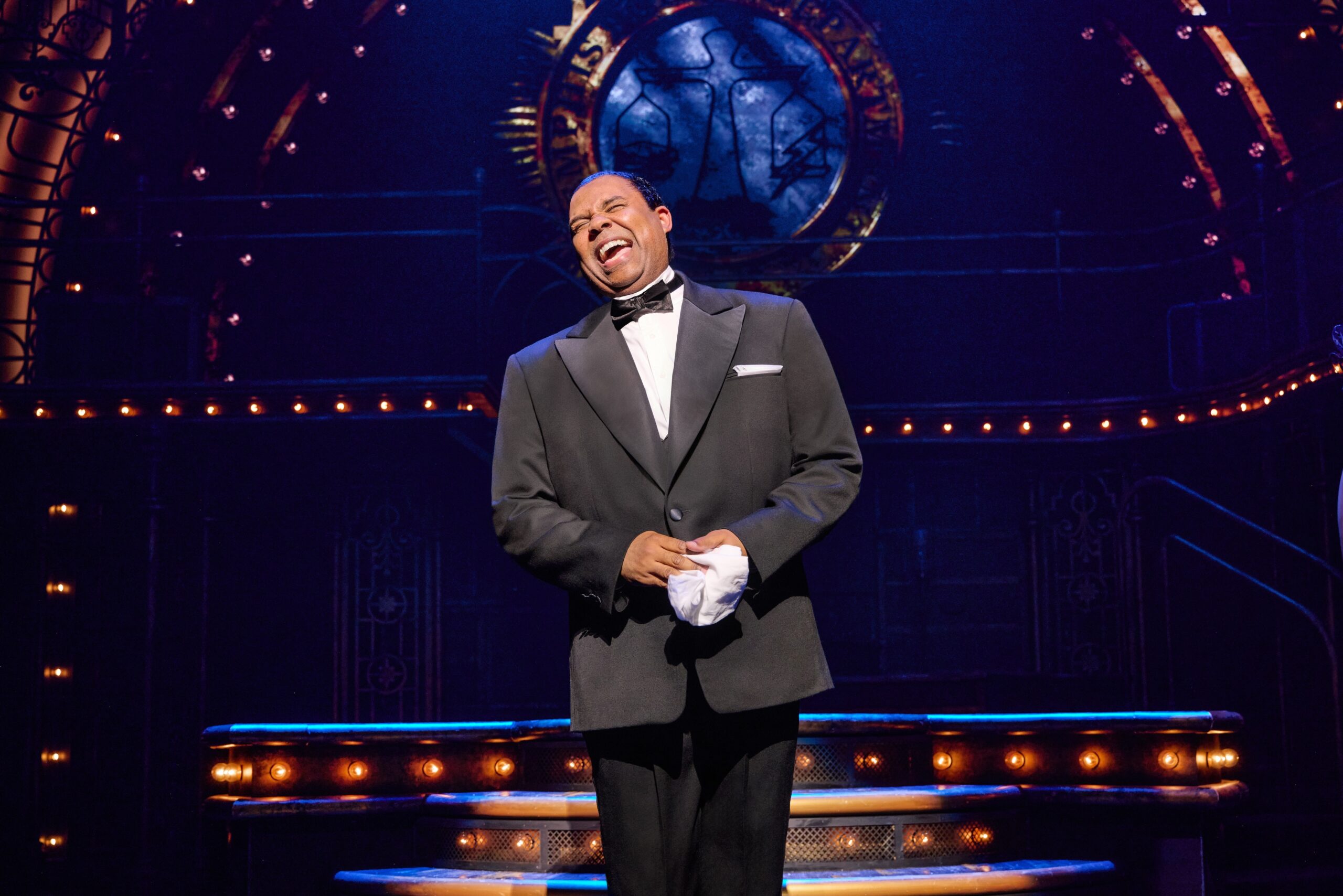
It’s a Wonderful World unspools Louis Armstrong’s “rags to riches” journey and rise to fame. The musical reveals Armstrong’s passion for jazz throughout his life. As the story of jazz intersects with Armstrong’s life and career, it parallels the Black experience in America. With book by Aurin Squire, conceived by novelist Andrew Delaplaine and Christopher Renshaw, you won’t be able to sit still for the sheer glory of Armstrong’s hot jazz that defined an era. The sizzling musical currently runs at Studio 54.
If you are not familiar with the life and times of “Satchmo,” the musical fills in the highlights and wisely centers on his four marriages. From first to last, his wives shaped his career, inspiring his talent and helping him expand his range.
Consequently, the musical manages to cover much ground. It sparks fire with hits associated with his legendary career (orchestrations/arrangements by Branford Marsalis). Superbly portraying Armstrong, Tony Award® winner James Monroe Iglehart dances, plays trumpet and sings with vibrance in the Armstrong style. Iglehart gives a stunning, versatile performance and inhabits Louis Armstrong’s voice and ethos. Likewise, as his wives, Dionne Figgins, Jennie Harney-Fleming, Kim Exum and Darlesia Cearcy have powerful, resonating voices that answer Iglehart’s thrilling performance.
A well-structured musical
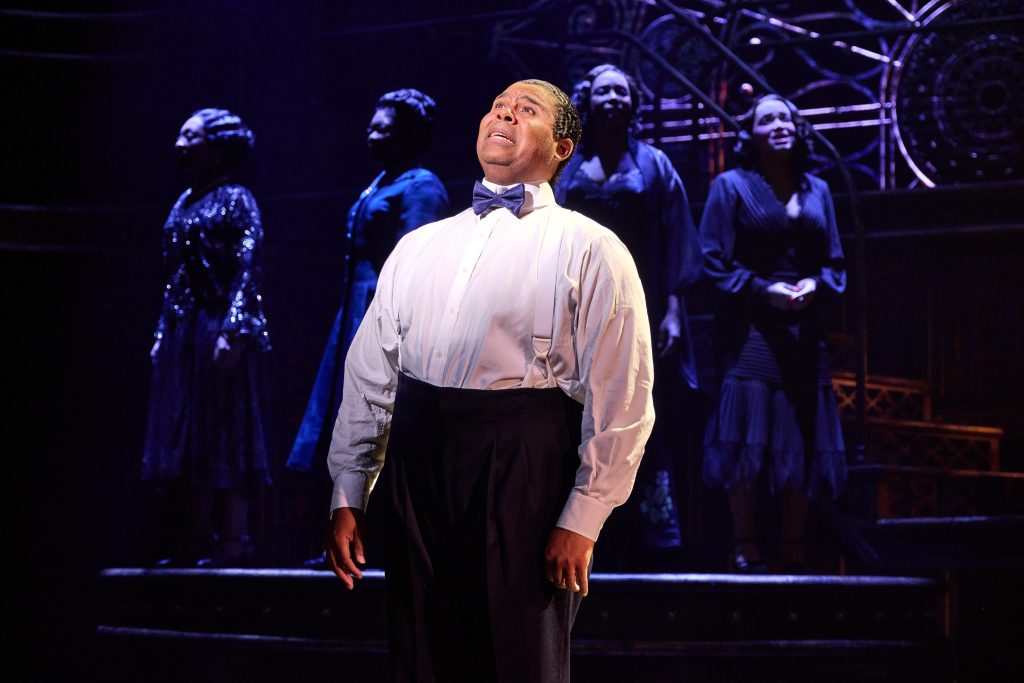
In a prologue, rehearsing with his piano man in the 1970s Armstrong meditates on how jazz and love fueled his life (“Now You Has Jazz”). From there, Satchmo flashes back to the four key chapters in his life. Act I, set in the 1910s, reveals the start of his career playing with King Oliver in New Orleans, during his marriage to his first wife, Daisy Parker (Dionne Figgins). After a precipitating event, he leaves Daisy and follows Oliver to Chicago (1920s). There, he meets his second wife, Lil Hardin (Jennie Harney-Fleming), who manages his career and finances for a time. However, because of problematic events, Armstrong moves on and tours. To escape danger and problems he always goes on the road.
Act II opens with Armstrong traveling to Hollywood in the 1930s, where his career in films takes off. There, he marries his third wife, Alpha Smith (Kim Exum). Once again, forced to move on, he decides he needs a “white man,” an important theme throughout the musical. Not only does a white man network gigs for him, he also manages finances and promotion so Armstrong can concentrate on playing whatever he wants, wherever he wants.
Louis Armstrong Gets His “White Man”
In his later years, depicted in the fourth chapter, Armstrong marries Lucille Wilson (Darlesia Cearcy), whom he meets in the Cotton Club. After this development and his great success with manager Joe Glaser (Jimmy Smagula), who protects him, Armstrong does the forbidden. He makes political statements that Glaser warns him not to make.
Interestingly, despite Armstrong’s career receiving blowback, Glaser remains loyal. Finally, that loyalty pays off and Armstrong cuts a record of a song in a musical that becomes a #1 hit and Grammy winner. In closing, the flashback ends and Armstrong returns to the present and prepares to sing his final concert for “his people” in New Orleans. Squire, Delaplaine and Renshaw end poignantly underscoring why Armstrong believes the words in “What a Wonderful World,” as the musical concludes to a standing ovation.
Turning Points
Importantly, It’s a Wonderful World doesn’t soft-pedal the racism Armstrong faced. But it deals with it cleverly. The show interweaves how racism and cruelty forced Armstrong to continually relocate, staying one step ahead of white supremacists. With profound grace and irony, the musical depicts the exploitation of Black musicians by criminals, a theme of the music business to this day. At one point, Armstrong leaves a gig on a New Orleans riverboat after seeing the horrific results of a Black person standing up to a “white man.” Until he strikes a deal with Glaser, he can’t settle down and not feel threatened.
Though Armstrong’s “hustle” was always expressed with a smile, the production reveals the sensitive, brilliant individual behind the smile. Indeed, living in two social cultures, Armstrong had to “get over” with his shining grin, then take the mask off at home. In his scenes with wives Daisy, Lil Hardin and Alpha Smith, the charming Armstrong puts staying alive and his career first. Always, his wives come second. In each scene with his them, as they say goodbye, we understand the horrors of the Black experience in racist America. With his fourth marriage, in an excellent scene with Cearcy’s Lucille and Smagula’s Glaser, we understand why Armstrong needs Glaser’s protection.
Armstrong lived in a dangerous America
In each instance, from Chicago to Hollywood, thugs try to corral Armstrong, use up his talents, pay him little and then kick him to the curb, leaving him destitute. An example of what could have happened to Armstrong if he didn’t tour occurs when he meets a broken-down street vendor. Sadly, the vendor introduces himself to Armstrong by his real name, not the fabulous musician’s identity (no spoiler) he once was. Seeing the show, you’ll understand how and why Iglehart’s Armstrong raced one step ahead of the criminals. Also, you’ll appreciate the irony and the hidden meaning in favorite Armstrong numbers like “Up a Lazy River,” “Avalon,” “Black and Blue,” “Tiger Rag,” “You Rascal You,” When You’re Smiling,” “The Star Spangled Banner,” and more.
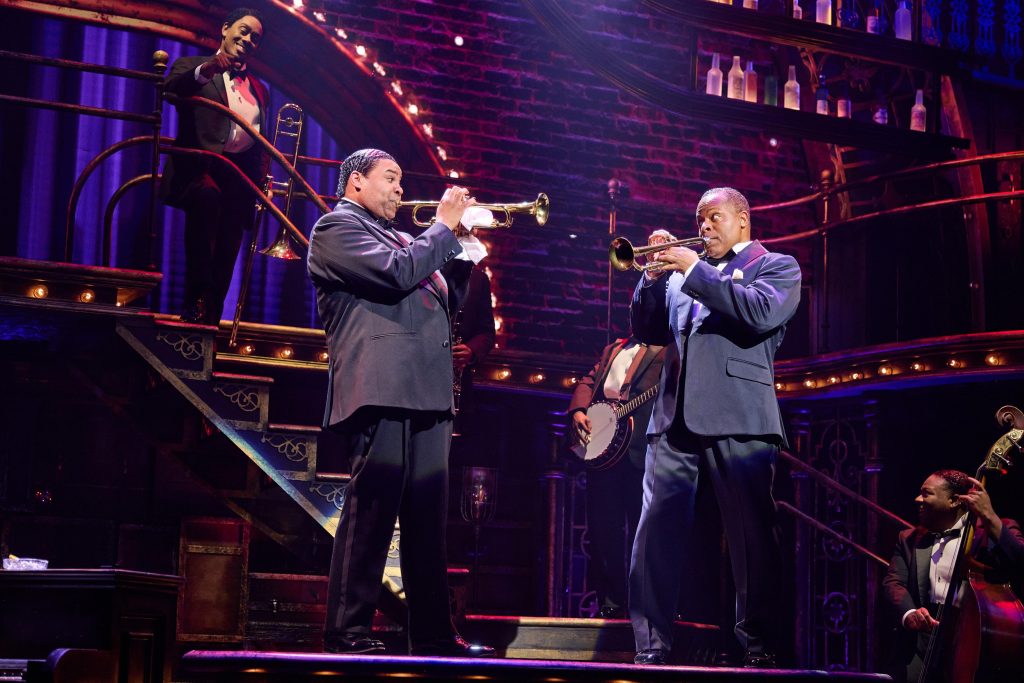
The first-rate ensemble shepherded by Christopher Renshaw’s direction keeps Armstrong’s journey moving at a brisk pace. The understated humor is superbly woven into every scene. The musicians and dancers deliver standout numbers with vitality and enthusiasm. “When You’re Smiling” rocks with Inglehart’s Armstrong, Dewitt Fleming Jr.’s superb tap dancing as Lincoln Perry, and the ensemble. It hits the spot and conveys profound meaning about “survival.” Praise goes to Ricky Tripp’s choreography and musical staging. As for the portrayers of Armstrong’s wives, the audience raved after each of their solo numbers. They magically portray the sensational muses who journeyed through Armstrong’s passages of life.
Tasteful, Functional Spectacle
The representational elements of the sets (i.e. the symbolic wheel at the back of the stage) and video design, functionally and strategically placed, speed us through each of the locations and jazz venues. Toni-Leslie James’ colorful, period costumes add pizzazz to the glorious singing and dancing. Cory Pattak’s lighting design and Kai Harada’s sound design and the rest of the technical team make this a celebration of music. For those who never saw Louis Armstrong perform live or on screen, the show is a tribute to his greatness and the importance of jazz in American history through six decades. For those who have seen him, Inglehart’s scintillating performance encapsulates the iconic legend with style.
Special kudos go to the musicians and Daryl Waters’ music supervision, music arrangements and additional orchestrations. Likewise, Branford Marsalis’ orchestrations and arrangements add the razzle-dazzle to each number. Additional praise goes to James Monroe Iglehart and Christina Sajous who co-directed.
If you consider yourself an American and you like music that rises up and grabs your heart and soul, you must see It’s a Wonderful World. Squire, Delaplaine and Renshaw reveal Armstrong’s iconic majesty as a performer, a jazz artist and a courageous human being. Indeed, he lived and husbanded the preciousness of his talent. His passion for music and love of his women spurred on his life and helped him gain the freedom to remain above some elements of the repressive, hateful society that recognized his brilliance, but begrudged him for it.
It’s a Wonderful World runs two hours 35 minutes with a 15-minute intermission at Studio 54 at 254 West 54 St., NYC.