 Blogcritics The critical lens on today's culture & entertainment
The Baker’s Wife
The Baker’s Wife by Stephen Schwartz (music, lyrics) and Joseph Stein (book) toured the U.S. in 1976 and premiered on the West End in 1989 after considerable reworking. Since then the musical has been retooled and performed in the U.S. and elsewhere and continues to gain a cult following. Currently at Classic Stage (CSC), this profound, heartfelt musical directed by Gordon Greenberg closes its limited run on December 21, 2025. Add me to the fan club.
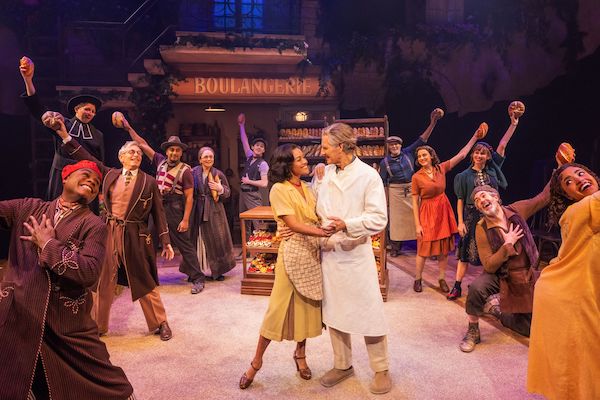
Based on the 1938 Marcel Pagnol film La Femme du Boulanger), itself an adaptation of Jean Giono’s novella Jean le Bleu, The Baker’s Wife takes place in a tiny Provençal village in the mid-1930s. The story follows newly hired baker Aimable (Scott Bakula) and his much younger wife Geneviève (Oscar winner Ariana De Bose). The townspeople, who have been without a baker and fresh bread, croissants or pastries for months, hail the new couple with hope when they finally arrive in rural Concorde. The villagers fight and hold grudges amongst each other, but all agree on needing a good baker who must make delicious bread.
Fresh Bread
If you have not been to France, you may not “get” the community’s orgasmic and funny ravings about Aimable’s delectable bread in the song “Bread.” Free from preservatives, dyes, and banned chemicals, the bread must be baked fresh daily. The importance of this superlative baker and his bread become the conceit upon which the musical turns.
Schwartz’s gorgeously lyrical music and the parable-like simplicity of Stein’s book affirm the values of forgiveness, humility, community, and graciousness. Geneviève abandons her loving husband and runs away to have adventures with handsome, wild, young Dominique (Kevin William Paul), the Marquis’ chauffeur. When the devastated Aimable starts drinking and stops making bread, the townspeople agree they cannot allow him to destroy himself – they must have their bread.
The humorous Marquis (Nathan Lee Graham) feels more upset about losing Aimable’s bread than the car Domnique stole to run away with Geneviève.
A Town Unites
Casting off longstanding feuds, the town unites and sends out a search party to return Geneviève to Aimable, who has, however, resolved to be alone. Meanwhile, Geneviève decides to leave Dominique who is hot-blooded but cold-hearted. In a serendipitous moment three of the villagers come upon Geneviève waiting to catch a bus to Marseilles. They gently encourage her to return to Concorde, affirming the town will not judge her.
Geneviève realizes she has nowhere to go and acknowledges her wrong-headed ways (acting like Pompom her cat who also ran off). She returns to Aimable for security and stability, and Pompom returns because she is hungry. Aimable feeds both, but scolds the cat for running after a stray tom in the moonlight. When he asks Pompom if the cat will run away again, DeBose’s Geneviève quietly, meaningfully tells Bakula’s Aimable that she will not leave. Her metaphoric comment lands with nuance.
Dynamic Staging by Gordon Greenberg
Director Gordon Greenberg’s dynamically staged and beautifully designed revival succeeds because of the exceptional Scott Bakula and the perfect Ariana DeBose, who also dances (choreography by Stephanie Klemons). DeBose’s singing is beyond gorgeous and Bakula’s Aimable sings with pride and poignancy. The superb ensemble evokes the community of the village that shares its vibrant life with the central couple.
Greenberg’s acute, well-paced direction reveals an obvious appreciation of and familiarity with The Baker’s Wife. Having directed two previous runs, one in New Jersey (2005), the other at the Menier Chocolate Factory in London (2024), Greenberg fashions this winning, immersive production with the café square spilling out into the CSC’s central space with the audience on three sides. Thus the production offers the experience of café seating for audience members.
Jason Sherwood’s Scenic Design
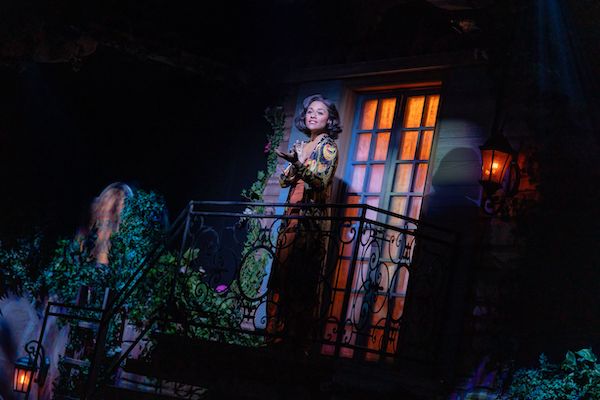
Jason Sherwood’s design creates the village atmosphere, with ivy draping the faux walls to suggest the quaint buildings. The baker’s boulanger on the ground floor at the back of the theater is in a two-story building with the second floor bedroom hidden by curtains, with the ivy covered “Romeo and Juliet” balcony in front. The balcony features prominently as a device for romance, escape, or union. There DeBoise’s Geneviève stands dramatically while Kevin William Paul’s Dominique serenades her down below, pretending it’s the baker’s talents he praises. And from there DeBoise exquisitely sings “Meadowlark.”
Greenberg’s vision for the musical, the sterling leads, and the excellent ensemble overcome the show’s flaws. The actors breathe life into the dated script and misogynistic jokes by integrating them as cultural aspects of the small French community of Concorde in the time before World War II. The community’s idiosyncratic members reveal that while they can be disagreeable and divisive, they come together to attempt to find Geneviève and return her to Aimable to restore balance to their collective, as bread is their emotional and physical sustenance.
A Fine Ensemble
Wonderful work by ensemble members keeps the musical pinging. Robert Cuccioli plays ironic husband Claude, with Judy Kuhn as his wife Denise. They are the café-owning, long-married couple who serve as foils for the newly married Aimable and Geneviève. They provide humor with wisecracks about each other, and the other townspeople chime in with their own jokes and songs about annoying neighbors.
Like the other townspeople, who watch the events with the baker and his wife and learn about themselves, Claude and Denise realize that the lust of their youth has morphed into love and great appreciation for each other in middle age. Denise opens and closes the production singing about the life and people of the village who gain a new perspective in the memorable signature song, “Chanson.”
Aimable and Geneviève’s Reunion Impacts the Townspeople
The event with the baker and his wife stirs the townspeople to re-evaluate their former prejudices. The women especially receive a boon from Geneviève’s actions. They toast to her while the men have to go on their search, leaving the women “without their instruction.” And for the first time Hortense (Sally Murphy) stands up to her dictatorial husband Barnaby (Manu Narayan) and leaves to visit a relative. Clearly, the townspeople are inching their way forward in getting along with each other, to “break bread” congenially as a result of an experience with “the baker and his wife” that they will never forget.
The Baker’s Wife is at Classic Stage Company through Dec. 21, 2025.