 Blogcritics The critical lens on today's culture & entertainment
While consumer-facing conventions like PAX dominate gaming headlines with flashy trailers and playable demos, the real engine of the interactive entertainment industry hums behind the scenes at business-to-business gatherings. Foremost among them in North America is the Montreal International Game Summit (MIGS), an annual industry nexus where developers, publishers, investors, and narrative architects converge to hash out the business and craft of making games.
As I stepped onto the floor at MIGS 2026, the prevailing mood was a mix of pragmatic realism and creative determination. With studios navigating tighter funding landscapes, shifting production models, and the immense pressures of modern game development, the conversations this year focused heavily on sustainability, adaptability, and leadership.
For media and industry insiders alike, the summit’s true value lies in its candid, executive-level panels, sessions where veterans pull back the curtain on what actually works (and what fails) inside today’s studios. Below is a look at five standout discussions from MIGS 2026 offering a revealing snapshot of where the video game industry is headed.
How IO Interactive’s Studio Strategy Shaped 007 First Light
- Host: Sandra Smedegaard Mondahl (Senior Manager, Global Studio Strategy @ IO Interactive)
- Panel Focus: Scaling teams, maintaining culture, and aligning distributed global locations under a unified vision during the development of 007 First Light.
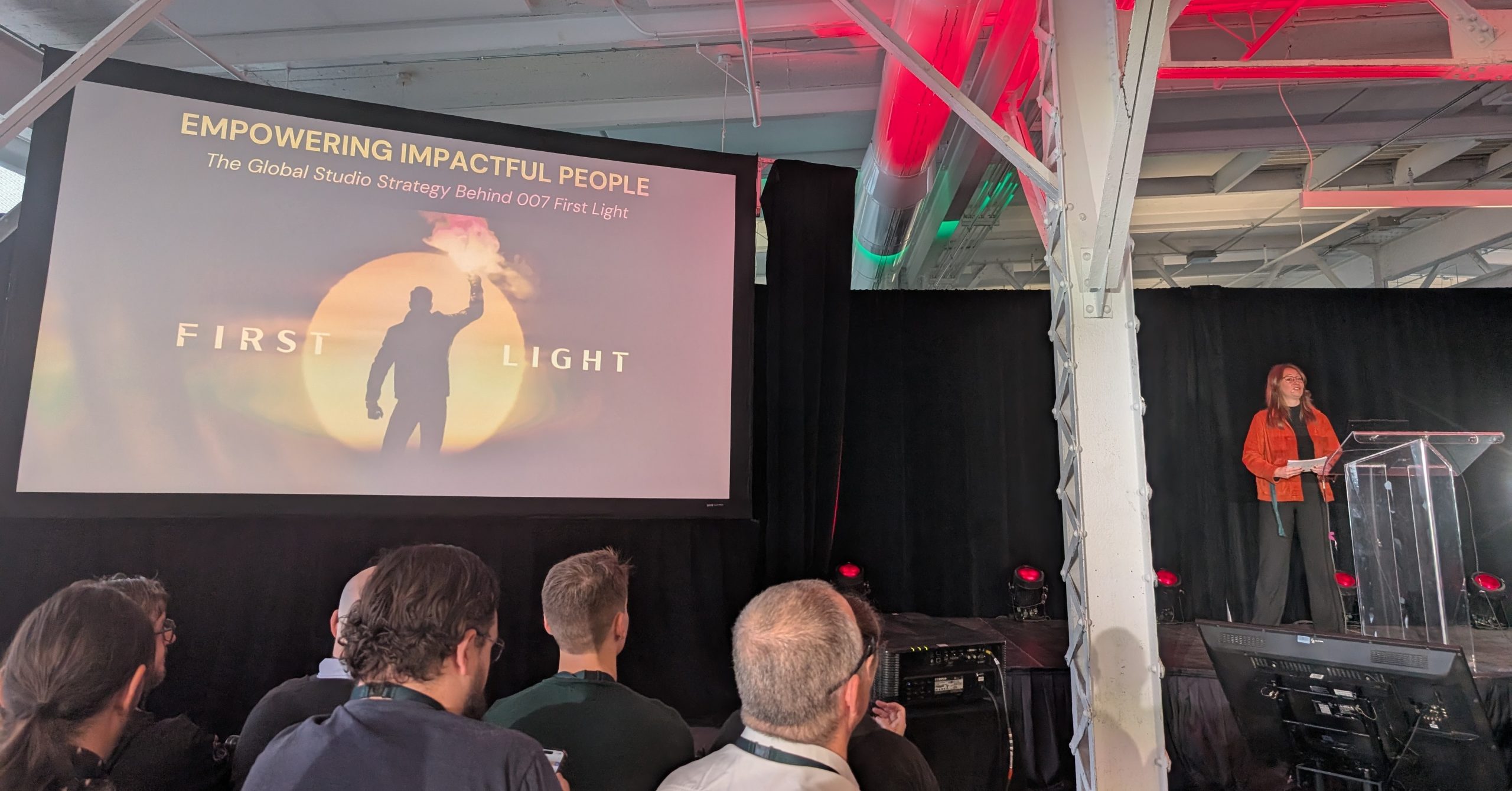
As IO Interactive evolved from a single-studio operation into a multi-studio powerhouse across Denmark, Sweden, Spain, and the UK, maintaining creative alignment became a massive operational challenge. Sandra Smedegaard Mondahl’s session explored how the studio treats every international location as an equal partner.
To prevent silos and cross-studio friction, IO Interactive instituted weekly all-hands synchronization calls to walk through roadmaps, benchmarks, and active tasks. Mondahl emphasized that transparent, lockstep communication lines are the lifeblood of multi-studio co-development—ensuring that individual studio autonomy never turns into organizational chaos.
It was incredibly interesting to hear Mondahl talk about the distributed nature of the studios and how it started as an experiment and led to a successful model. I had a chance to sit with Sandra Smedegaard Mondahl later in at MIGs so expect an in-depth interview with her in a future article.
So You Went Indie: How to Survive to the Pitch
- Hosts: Tanya X. Short (Kitfox Games), Clint Hocking (Build Machine Games), Kris Schoneberg (Studio Reset), and Osama Dorias (HeartLoop Games)
- Panel Focus: The logistical hazards, multi-focus skill sets, and psychological realities of jumping from AAA juggernauts into independent development.
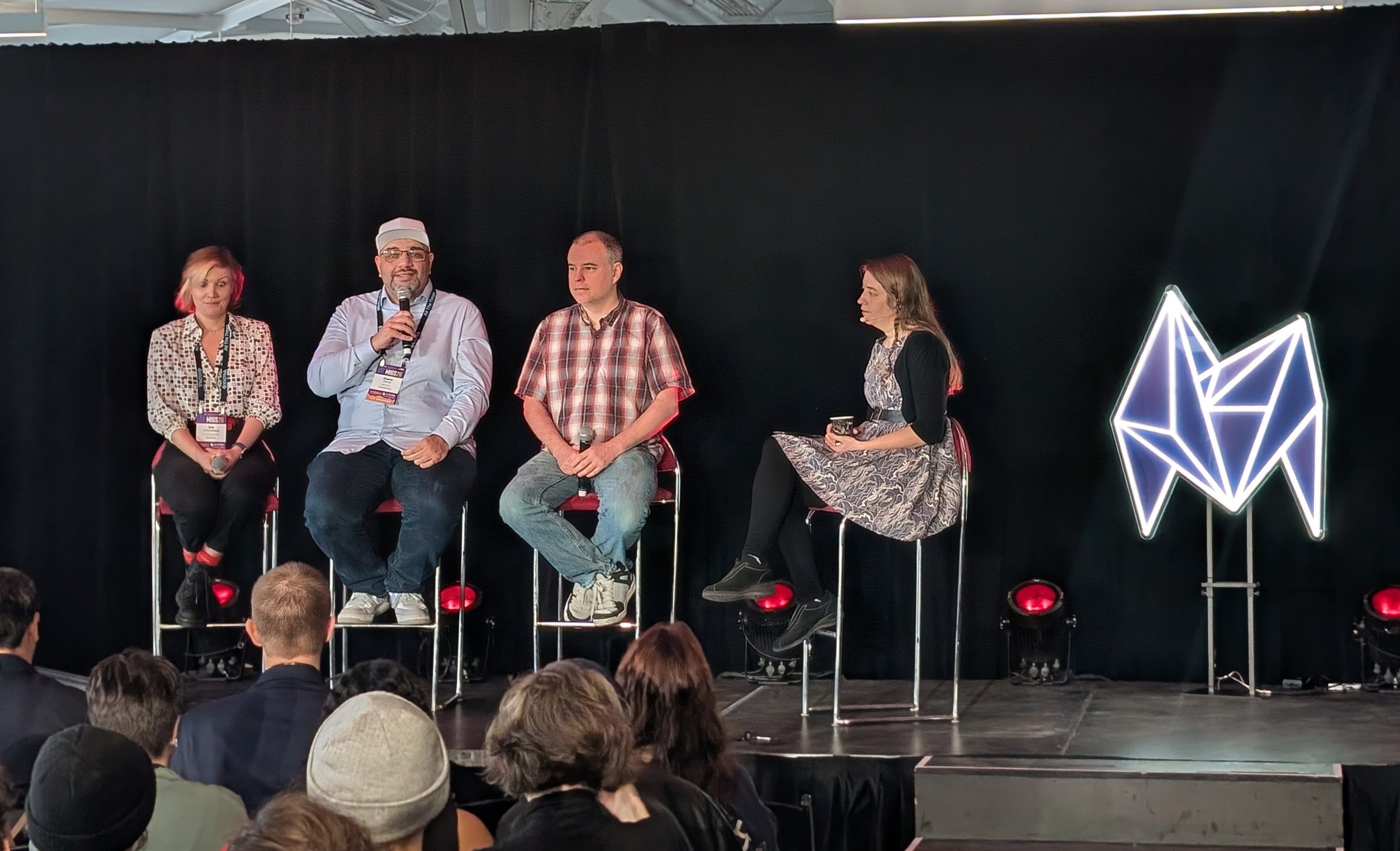
Leaving a comfortable senior role at an established AAA studio to launch an indie venture comes with hazards, particularly in a funding-scarce 2026 market. Veteran developers like Clint Hocking and Kris Schoneberg discussed the “curse” of the big-studio pedigree. While a recognizable past can open doors, founders must fight being boxed in by their former employers’ identities.
In a lean indie studio, multitasking is mandatory. Osama Dorias, fresh off shipping Poly Fighter, noted that small teams require members to wear multiple hats (e.g., designer-programmers or designer-audio specialists) while keeping everyone focused on the core build. Ultimately, the panel agreed that pedigree might get you your first meeting, but it’s a polished, marketable product that ultimately dictates indie survival.
The key takeaway for me in this discussion was that all members stressed that multidisciplinary roles, a focused design and everyone embedded in the project is key to survival.
Writing for Established IP
- Hosts: Ashley Cooper (Motive Studio), Lonnie Nadler (Bandai Namco), Yannick Belzil (Tribute Games), and James Nadiger (Ubisoft Montreal)
- Panel Focus: The creative balancing act of injecting a fresh voice into pre-existing characters and massive fictional worlds.
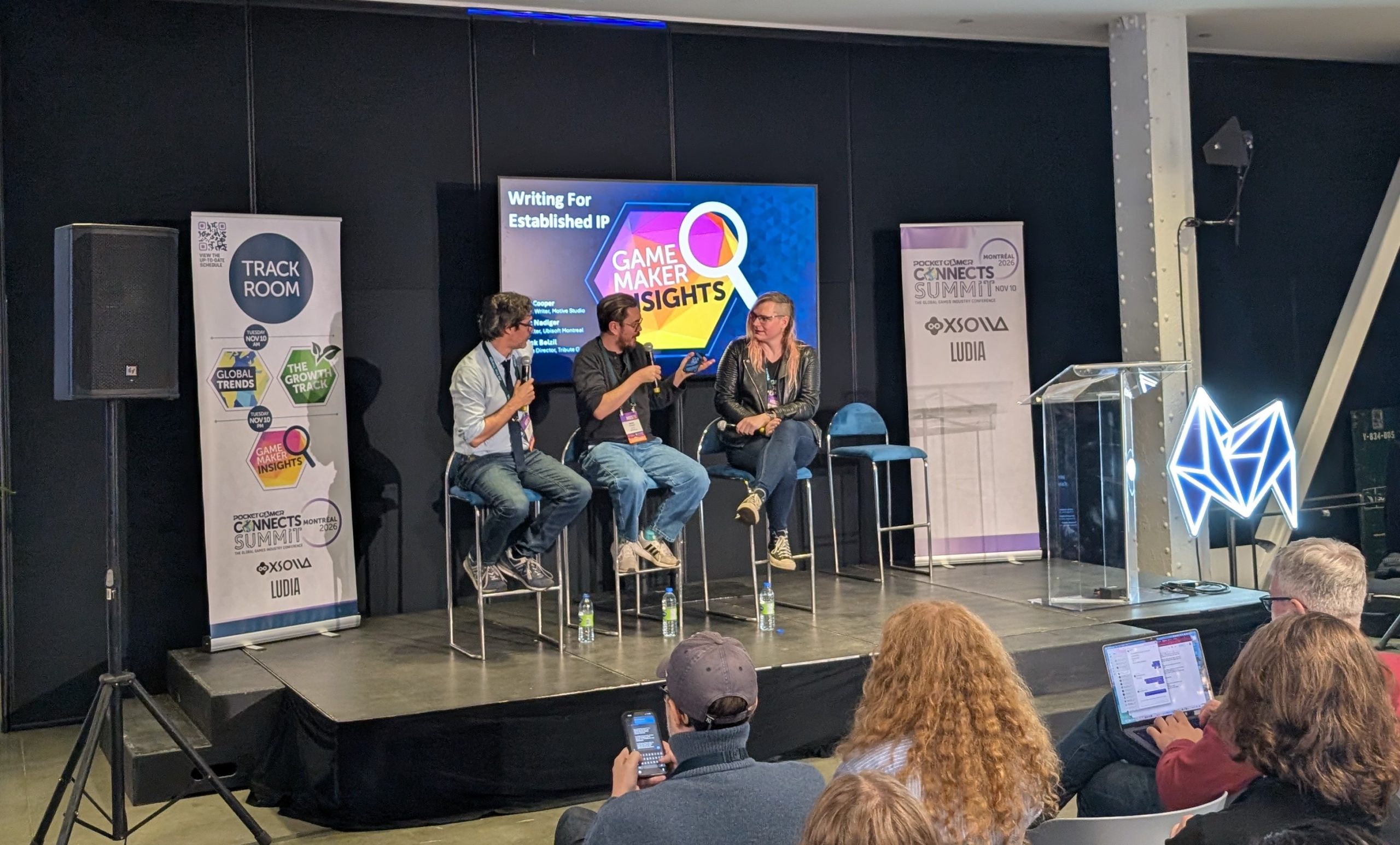
Part of the Pocket Gamer Connects stage, this panel tackled one of writing’s toughest balancing acts: stepping into worlds like Batman, Assassin’s Creed, Little Nightmares, and Marvel’s Iron Man. The panel warned against the dangers of being too much of a fan. While loving the source material is important, blind fandom can create creative blind spots when trying to craft innovative narrative beats.
The core takeaway from these senior narrative leads was simple: You don’t have to love the material you are writing for, but you must respect it. Respecting the established canon allows writers to honor the past while pushing the narrative forward with their own unique voice.
This panel was a great bit of insight into how a dream role writing for impressive established IP needs needs caution, restraint and remembrance of your own voice when writing.
Climate Change: Structuring Studioes for Success in Today’s Environment
- Hosts: Sandra Smedegaard Mondahl (IO Interactive), Wilson Mui (Warner Bros. Games Montréal), Dominic Guay (Invoke Studios), and Rob Clarke (External Development & Partner Operations, formerly PlayStation Studios)
- Panel Focus: Moving away from bloated permanent headcounts toward flexible specialist capacity, lean core teams, and agile co-development pipelines.
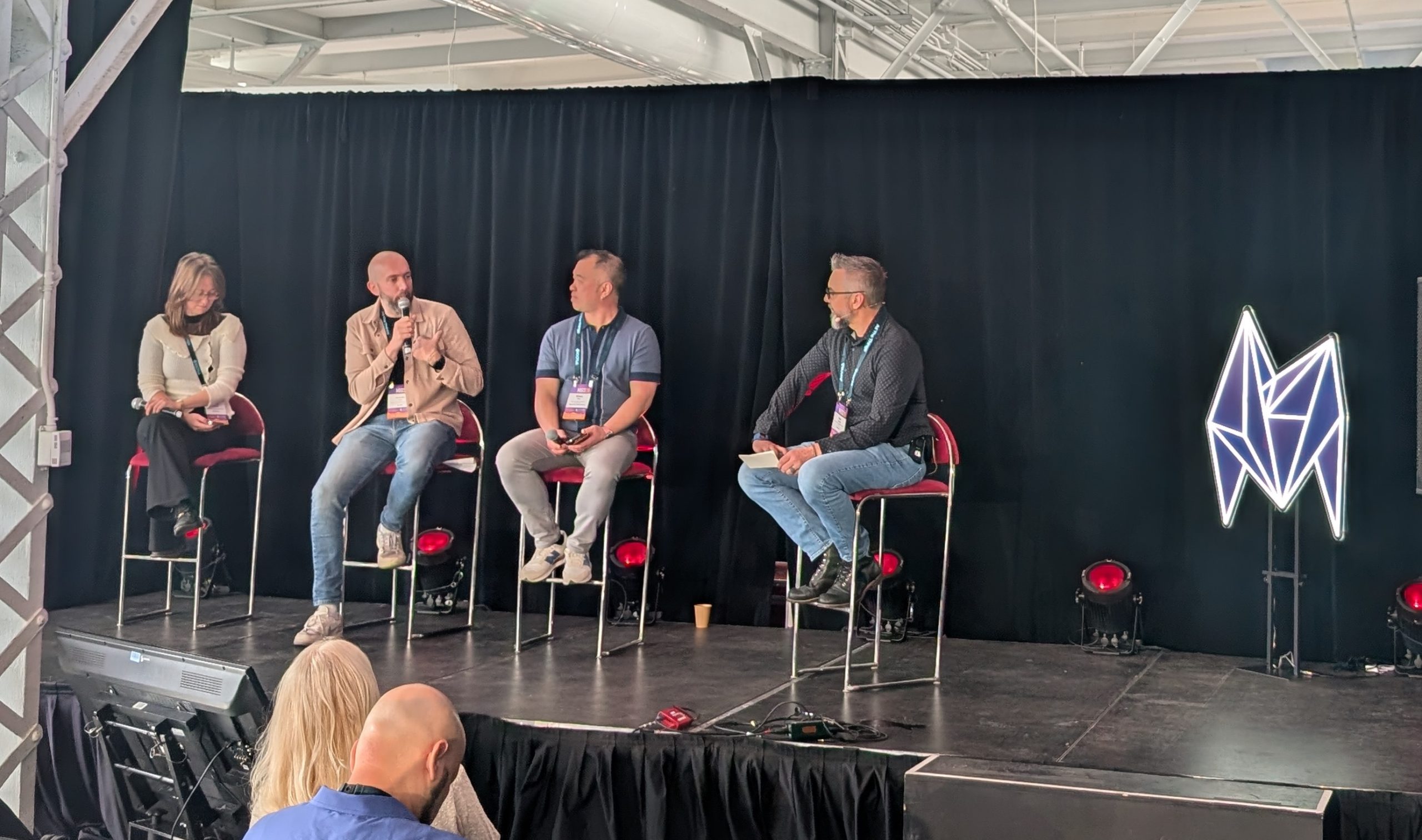
The economic climate for game development has forced major studios to rethink traditional scaling models. Rather than inflating permanent headcounts, modern first-party and AAA leaders are shifting toward a lean core framework that scales dynamically using external partnerships and co-development studios.
A recurring theme was the danger of out-scaling your management capacity. Speakers stressed that you cannot grow a studio faster than you can effectively manage it. Success in today’s landscape requires empowered communications leads who not only distribute messages across teams but also hold the operational authority to pause or pivot work streams when projects collide.
It was interesting hearing them all talk about the struggles of the new ecosystem, but also how each studio is innovating their workstyles and practices to adapt.
‘We’ll Fix It in Pickups’: The Most Expensive Sentence in Game Development
- Host: Susan O’Connor (The Narrative Department)
- Panel Focus: Identifying narrative landmines early in pre-production to avoid catastrophic story overhauls late in the development cycle.
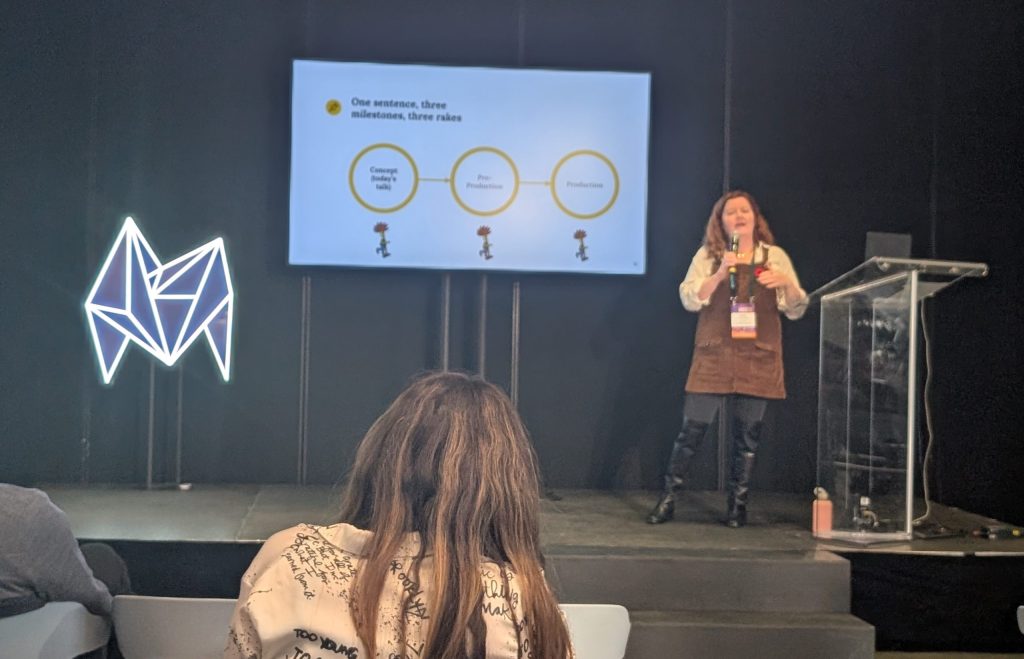
Award-winning writer Susan O’Connor delivered a vital reality check for studio directors and milestone approvers: Narrative is not an afterthought to be patched up at the end of production. Letting story problems linger until late milestones creates destructive landmines that can tank a game’s critical reception.
O’Connor noted that while an exceptional story won’t automatically sell a bad game, a fundamentally broken story can actively sink an otherwise stellar gameplay experience. Her advice to development teams was clear: Anchor your core narrative concept during pre-production, and ensure that every single gameplay milestone honors that foundational premise so you never have to face a panicked, late-stage rewrite.
The narrative process is so integral to video games, so it was great to hear O’Connor’s reality check on the key struggles to make it a significant part of the development cycle. I had the pleasure of sitting down and chatting with Susan O’Connor as well at MIGS and will feature our discussion in another article.
If you attended, what were your favorite takeaways or panels from MIGS 2026? Let us know in the comments below!