 Blogcritics The critical lens on today's culture & entertainment
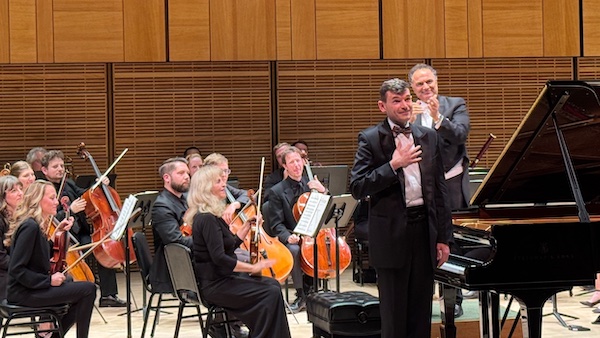
Music, we say, is the universal language. Still, it’s often a particular place that inspires a composer. Felix Mendelssohn and the Hebrides. Jordan Nobles and his homeland of Canada. Lou Reed and New York City. Composer-conductor Bahman Saless of the Boulder Chamber Orchestra took the Rocky Mountains for his muse for “Ode to the Rockies,” his craggy mini-suite that kicked off the orchestra’s 20th-anniversary celebration concert at Carnegie Hall’s Zankel Hall on May 18.
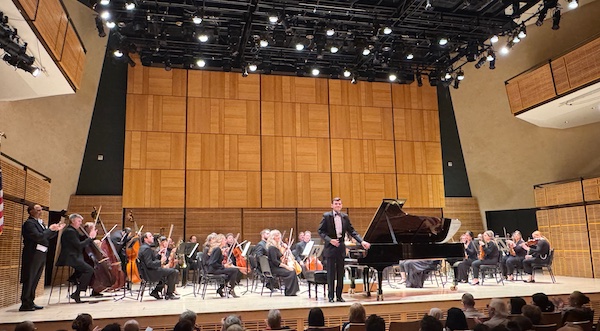
Pianist Adam Żukiewicz too has been a significant presence in the Boulder area for some time, including with the Colorado Piano Trio, whose first release came out in March. Żukiewicz, who joined the ensemble for Saint-Saëns’ Piano Concerto No. 5, has praised the “extraordinary chemistry” among the musicians of the Boulder Chamber Orchestra. “In addition to being first-rate artists,” he told me in our recent interview, they are warm, generous, and kind human beings…It’s that familial spirit – shared not only among the players but also with their audiences – that keeps drawing me back.”
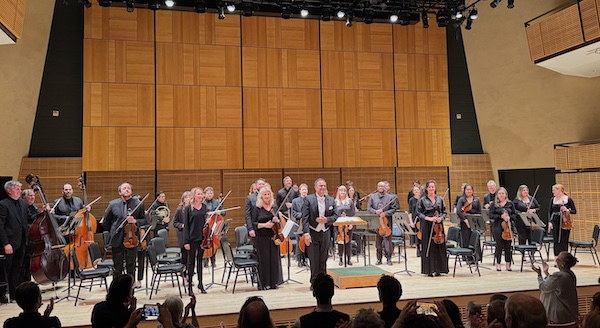
But first came Saless’ ode. He and the orchestra delivered it with dynamic energy and conviction. Laced with classical exuberance, the piece includes themes from the John Denver hit “Rocky Mountain High” as well as from “Where the Columbines Grow,” a state song of Colorado.
Adam Żukiewicz Channels Saint-Saëns’ ‘Youthful Joy’
A “false” ending made for a touch of confusion, but the only detraction was a hint of imperfect tuning. Perhaps a couple of the instruments needed a little more time to adapt to playing at sea level! Whatever the case, the problem persisted a little ways into the first movement of the Saint-Saëns but then seemed to smooth itself away. This was important as the orchestra must coalesce into a listening accompaniment to the cascading runs and glittering harmonic changes from the piano.
Żukiewicz’s finely honed articulation was matched by a soulful quality he brought to the “Allegro animato.” With its outbursts and pinpoint cadenzas, it requires a particular virtuosity as the composer makes the piano part feel all of a piece with the accompaniment.
The theatrical second movement, with its syncopated rhythms, tempo changes, and gossamer piano runs framing a simple nursery-type theme, offers a study in contrasts. That simple tune flowers into something brightly passionate. Maestro Saless adroitly managed the varied feels and moods.
Saint-Saëns’ effervescent perpetual-motion passages in the “Molto allegro” finale shone with easy dexterity in Żukiewicz’s performance. A “virtuosic display of youthful joy” is how the pianist described the movement, and that was fully evident, but he also displayed a mature mastery of dynamics and flow, abetted by an orchestra that bloomed to match him.
Beethoven’s Symphony No. 7
I never want to miss an opportunity to hear Beethoven’s Symphony No. 7. Saless and the orchestra approached it with verve. Initially the majestic first movement was marred by a few moments of incoherence in the upward scales, but quickly things settled. The spirited dance elements resonated, and the sound was pleasingly songful in the tuneful passages.
In the famous “Allegretto,” with its dark harmonies and steady beat, the brass and winds occasionally overpowered the strings – something is lost if those magical-quick changes from major to minor in the main theme don’t grab you with enough force. But all in all the performance had the right spirit, and the musicians’ skills and ensemble work were evident. (Saless had mentioned having introduced a dance-forward rhythmic change in the basses, but I didn’t catch it.)
Bright sound, rhythmic precision, and pure fun gelled into a strong, colorful performance in the jubilant third movement. Parts of this movement feel to me almost as unusual as the haunting second, a reminder that the mostly celebratory nature of this symphony co-exists with Beethoven’s ever-present experimental and indeed uneasy spirit.
For the finale, the orchestra engaged its engines fully, each part and each section ringing with conviction – and with the requisite dance flavor.