 Blogcritics The critical lens on today's culture & entertainment
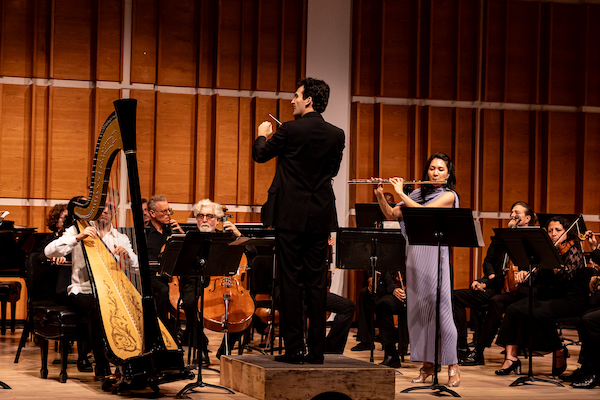
The music of the night was the theme of the first concert of the new season from the chamber orchestra Parlando. But as conductor Ian Niederhoffer pointed out in his introduction, “night” has many flavors, and many emotional connotations. Composers have evoked them in countless ways over the centuries. This “Night Music” program drew on Mozart, Fauré, Bartók, and Tōru Takemitsu to prove the point.
Fauré’s “Nocturne” from his Shylock Suite, incidental music to a late-19th-century French production of The Merchant of Venice, is only a couple of minutes long. But here it functioned as more than an introduction or appetizer. The string orchestra produced a cool, glowing sound that evoked the romantic spirit of the night while establishing Mr. Niederhoffer’s tasteful sense of balance and tone.
At Sea with Parlando
Takemitsu wrote his Toward the Sea II (1981) to support Greenpeace’s “Save the Whales” efforts. Taking Moby-Dick for inspiration, the composer initially penned a work for flute and guitar. Reimagined for flute, harp, and strings, its three short movements conjure the uncertainty and the seething and sometimes explicit violence of the sea.
The first, “The Night,” progressed with a curious kind of calm disharmony, softly atmospheric with hints of anxiety.
See our interview with Parlando’s Ian Niederhoffer
The score calls primarily for the flute’s lower register, the sound standing out even as it flowed smoothly with the strings and harp. Both soloists, flautist Yoobin Son and harpist (and A Golden Wire co-founder) Parker Ramsay, were key to the atmospheres of these movements. (They revealed their respective abilities and techniques more thoroughly in the Mozart that followed.)
The second movement, titled “Moby Dick,” progresses in swells and pauses suggesting gusting wind and heaving waves. The introspective final movement, “Cape Cod,” bore rich, friendlier harmonies, though these remain dense and continue to defy expectations.
Tom Service described Takemitsu’s music well in The Guardian some years ago, writing, of a different piece, that “it seemed to be in a permanent state of ethereal evanescence, shimmering and suggesting rather than stating directly, and yet its impact was absolute, definite and unforgettable.” Toward the Sea II had just such an effect at Merkin Hall last night.
Dread and Disaster
The “Andantino” from Mozart’s Concerto for Flute, Harp, and Orchestra was a good respite, reflecting the warmth and intimacy that night can embody. Son and Ramsay shone at the forefront of a performance drenched in charm and bordering (Mozart’s fault, not Parlando’s) on syrupy. After a short break to re-set the stage, the orchestra reassembled for the evening’s big guns: the four wrenching movements of Béla Bartók’s Music for Strings, Percussion and Celesta.
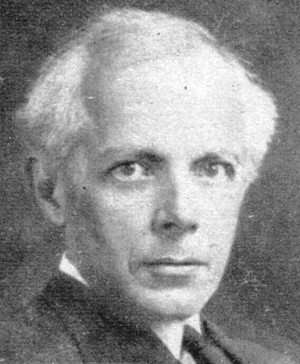
This piece took on the role in this Parlando play of night’s fearsome aspect. Bartók creates a real sense of menace as the first movement builds to a colossal fugue. A sudden crash turns the main theme upside down and things stagger on from there. The orchestra stressed the music’s startling moments, as when the celesta emerges as if out of nowhere.
Dread explodes into disaster in the second movement. This is a challenging piece to hold together, and while the complex rhythms sounded a little muddy at times, the sense of terror caught fire and grew, through pizzicato panic as much as through thundering tympani. The hypnotic third movement and the brilliantly played cascading dissonances of the finale were stunningly jarring in different ways.
The holistic effect through the entire work was one of constant distress, with destruction of any of the peace that in other circumstances night might bring. None of this is easy, and overall Mr. Niederhoffer and his small army of strings and percussion brought it off with fortitude and skill, and with fealty to the spirit of the composer’s fraught state of mind as fascism overtook his native Hungary.
For upcoming Parlando events visit the orchestra’s website.