 Blogcritics The critical lens on today's culture & entertainment
Mark Twain once famously maintained it could probably be shown through facts and statistics that there’s “no distinctly American criminal class – except Congress.” What then would that celebrated observer of Gilded Age corruption and criminality make of the facts and statistics recently released by the Departments of Justice (DOJ) and Homeland Security (DHS) in their latest Alien Incarceration Report?
If you haven’t heard of that report, there’s a simple explanation: that data was not even officially required to be collected until about a year ago, when President Donald Trump signed an executive order on Jan. 25, 2017 dealing with immigration law enforcement.
The part of that presidential executive order which gathered the most press attention calls for cutting off, wherever possible, federal funds to so-called “sanctuary cities,” localities which refuse to cooperate with federal immigration enforcement efforts, by, for example, refusing to notify federal authorities before releasing federally-sought inmates from local custody.
But section 16 of the order mandates quarterly reports from DOJ and DHS on the immigration status of aliens in three incarcerated groups: those in Federal Bureau of Prisons (BOP) facilities, pretrial detainees held by another part of DOJ, the U.S. Marshals Service, and convicts in state prisons and local jails.
The most recent report, issued Dec. 18 and covering the last quarter of Fiscal Year 2017 (July through September 2017), doesn’t supply data on inmates incarcerated by state and local governments even though they make up about 90% of the nation’s total inmates, though the report claims progress is being made on collecting that information. But for the two groups in DOJ custody, the report does provide some astonishing figures.
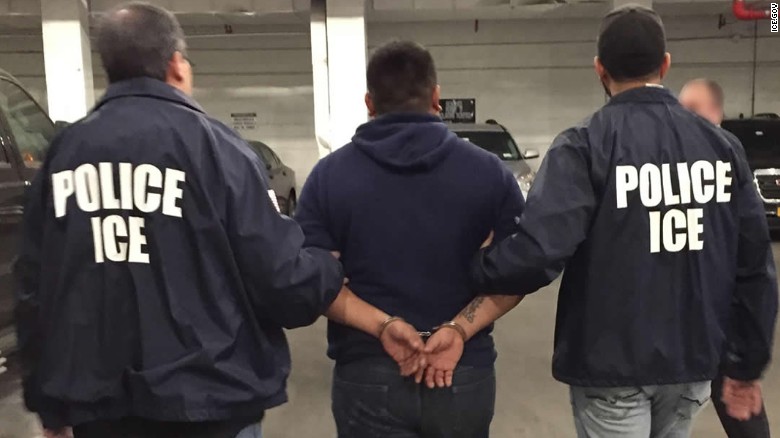
Here’s one: DOJ had 185,507 inmates in its custody, and knew or suspected 37,557 of them had been born outside this country. Out of that number, Immigration and Customs Enforcement (ICE) was able to confirm that 35,334 were not only born elsewhere, but were also here illegally, i.e. they were not U.S. citizens, lawful residents, or otherwise authorized to be here. ICE is still working to confirm the immigration status of 21,209 other foreign-born individuals in DOJ custody.
And here’s another: Among foreign-born people in DOJ custody, 92% of those in BOP facilities were found to be unlawfully present in this country, and 97% of the pretrial detainees being held by the Marshals Service identified as born outside the U.S. were similarly confirmed by ICE as being here unlawfully. So altogether, 94% of foreign-born persons being held by DOJ and 21% of all inmates in DOJ custody were reported to be here illegally. That’s well above the estimated 13.5% of people living in the U.S. who were born abroad, and the lesser share of them not here legally.
Setting the stage for a likely fight in Congress next year, Attorney General Jeff Sessions pointed to the report’s figures as showing U.S. citizens were “being victimized by illegal aliens who commit crimes,” especially drug-related offenses. He called on Congress to enact the Trump Administration’s proposals for immigration reform, so that the nation can “start welcoming the best and brightest,” while also “turning away drug dealers, gang members, and other criminals.”
Christopher Zoukis is the author of Federal Prison Handbook: The Definitive Guide to Surviving the Federal Bureau of Prisons, (Middle Street Publishing, 2017), and College for Convicts: The Case for Higher Education in American Prisons (McFarland & Co., 2014). He regularly contributes to The Huffington Post, New York Daily News, and Prison Legal News. He can be found online at ChristopherZoukis.com, PrisonEducation.com and Prisonerresource.com.