 Blogcritics The critical lens on today's culture & entertainment
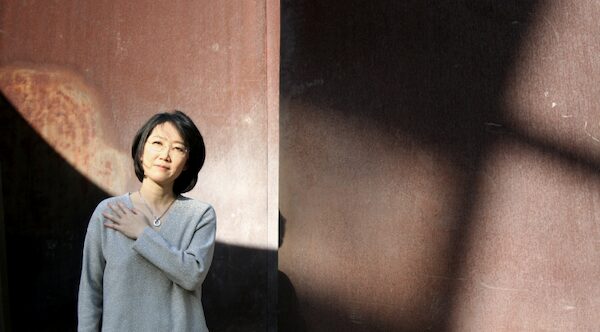
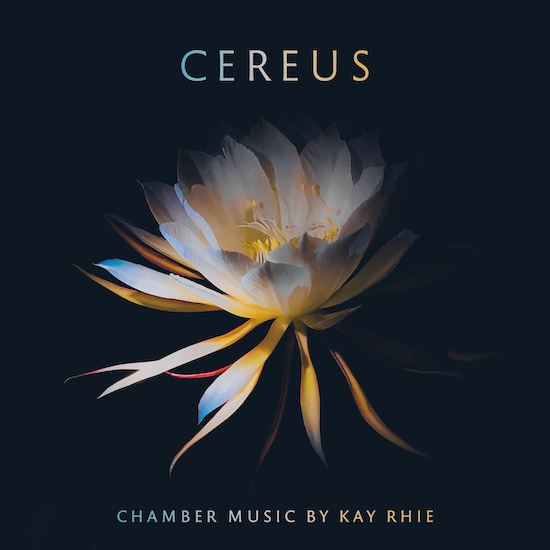
Two of the works on Cereus, the new album of music by Kay Rhie, are settings of poetic texts. But the album pointedly opens with its most challenging instrumental music, in the opening strains of the title track. Words inspired that piece too, as the composer explains: “Cereus (Night Blooms)” took flight from “a large collection of articles and scribbles” she found going through her writer-father’s medical papers as he was dying, materials that “were obviously possible source materials for his to-be written stories.”
Abstract Expression
The story Rhie creates in the piece is more or less abstract, certainly not programmatic, but evocative nonetheless. An initial series of fragmented stabs and swoons from the violin, cello, and clarinets develops into a flowing landscape of thematically consistent and dynamically varied gestures that grow more insistent and compelling as the picture fills in. A snaky violin melody in the fourth minute of the 13-minute piece heralds a sequence of compelling melodic and harmonic passages full of intense if clouded emotion. Past the halfway point, the fragmentation returns. But now, familiarized with the language of the piece, we find greater meaning in it.
Over the final minutes, peace and quiet reign, enhanced rather than disturbed by dissonances and rough timbres as we remember the wrenchings of the first section. These quiet moments flow nicely into the opening strains of the song cycle I Hear the Sound of Trees, settings of verse by Walt Whitman and A.R. Ammons on the general theme of oneness with nature.
Soprano Leela Subramaniam sings here (and in the other included song cycle, Suite from Quake) in a “legit” and quite beautiful operatic style that lends both grounding and authenticity to the music. The accompaniment in particular, from piano and alto saxophone, keeps the listener on their toes with unexpected accents and loping melodies. One detects some of the same eccentricities heard in the preceding instrumental work.
The compact songs are alternately sharp and soft, playful and contemplative. The music fits the words neatly, subtly. Listen for example to the stop-and-start of the short lines of “Reflective”; the demonstrative velocities and melodies bestowed on words like “motions” and “interweaving” in “Cascadilla Falls”; the long fadeout after the word “Souls” in “Perfections”; and the glowing, rising melody of the phrase “log and star” in “Love Song.”
Others’ Dreams
Rhie was inspired to write …in the dreams of another…, a mini-suite in five movements for violin and viola, by observing during the pandemic “how people talk over one another on Zoom followed by awkward silences.” The two instruments engage in “conversation” characterized at times by talking over one another, but often in synchrony and rhythmic concert, especially in the first two movements (the tense and awkward “After You” and the quirky dance of “Circular”).
The mournful movement that gives the piece its title sits in the middle, with the viola humming by itself a dirge-like melody that seems to float in a keyless, timeless space. “Game,” which follows, isn’t playful like the title suggests, but anxious and longing, full of abrupt two-note gestures and descending glissandos. Finally it comes to rest in quiet harmony. The last movement seems to depict a hesitant attempt at connection, full of starts and stops but mostly in coordination.
Quake: Odysseus’ Return
Suite from Quake comprises four arias for soprano from Rhie’s Los Angeles-themed opera Quake, based on Odysseus’ homecoming in The Odyssey. Opera UCLA commissioned the opera and premiered it in 2023.
This is the most “accessible” music on the album, but still indisputably in Rhie’s vocabulary. Now backed by a larger ensemble, and placed in a dramatic narrative, soprano Subramaniam convincingly delivers melodies that shade into Romanticism. In Amanda Hollander’s libretto the characters Penelope and Athena move from melancholy to defiance, before philosophizing over Angelenos’ perpetual consciousness of the threat of an earthquake or a wildfire. (“This burning land of palm catastrophe / This ever-shaking world beneath our feet.”)
Cereus reveals Kay Rhie’s ability to adapt her style for abstraction and direct storytelling alike. The excellent musicianship on all the selections further strengthen her vision. Cereus is out now on New Focus Recordings and available at Bandcamp.