 Blogcritics The critical lens on today's culture & entertainment
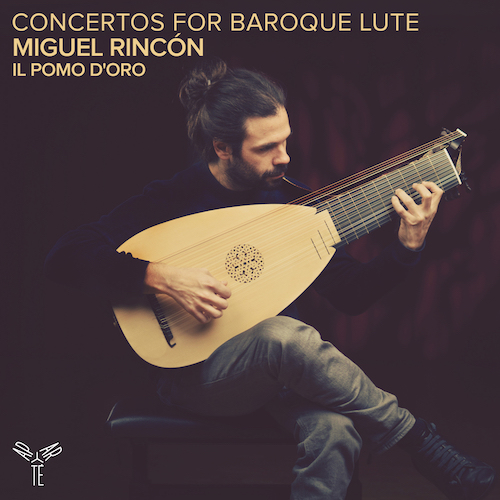
Miguel Rincón and Il Pomo D’Oro: Concertos for Baroque Lute
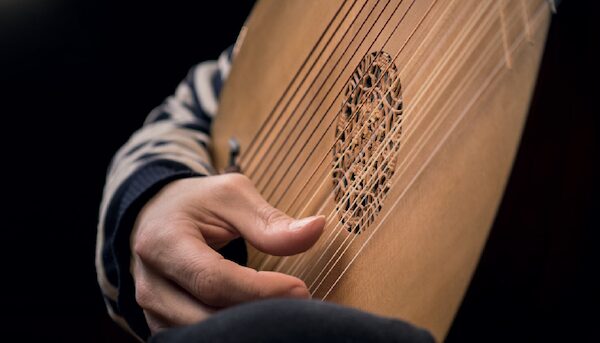
Lutenist Miguel Rincón writes in his program notes for Concertos for Baroque Lute, his new album with historically informed ensemble Il Pomo D’Oro, that the repertoire represents the last gasp in the lute’s history as a prominent instrument “before it ended up being completely ousted in favour of the classical guitar.”
It’s true that today if we hear a lute it’s usually as an ensemble instrument or accompanying a singer or another solo instrument. But these 18th-century concertos feature the good old lute as an equal partner or a lead, and in Rincón’s sensitive hands it shines as such.
It’s evident on even a superficial listen that these works date from the late Baroque period. The composers’ names aren’t likely to ring bells with the typical classical music fan. But the program shows how in the mid-to-late 18th century, with the classical style of Mozart and Haydn ascendant, Karl Kohaut, Bernhard Joachim Hagen, and the two others represented here contributed to a continuation of the lute’s presence in the musical zeitgeist of Germany and Austria.
World Premieres
The album includes world premiere recordings of Hagen’s Trio in E-flat Major and the Lute Concerto in C Major by Jakob Friedrich Kleinknecht, whose first movement features a strikingly beautiful lute solo. Along with the relatively better-known Lute Concerto in C Major by Kohaut and the Lute Concerto in D minor by Johann Friedrich Fasch, they comprise a lovely survey of this little-heard, style-bridging subgenre.
The lute’s prominence amid a sparse setting of two violins, viola, cello, double bass, and harpsichord allows us to appreciate the full richness of its tone, not to mention Rincón’s virtuosic mastery. His acutely soulful technique is on full display throughout the album, notably at moments like the cadenza in the slow second movement of the Fasch.
Concertos for Baroque Lute is out now on Aparté Music.
Makaris: Allan Ramsay’s The Gentle Shepherd: A Scots Pastoral Comedy
Another notable world-premiere recording of 18th-century music comes from a New York-based ensemble called Makaris. The group focuses on the intersection of folk and chamber music and specializes in chamber-music adaptations of folk music of the British Isles.
Detailed liner notes about The Gentle Shepherd‘s convoluted history and Makaris’s creative resurrection of it make a case for this “pastoral comedy” as “not only the first Scottish opera, but the earliest ballad opera.” It predates by a few years John Gay’s infinitely more famous Beggar’s Opera, as the earliest version of The Gentle Shepherd dates from 1725. So 2025 is a perfect anniversary year for this recording.
Interestingly, it was the popularity of the Beggar’s Opera that led Ramsay to significantly expand his own work, so that Makaris’s realization occupies a full 71 minutes of songs and instrumentals.
The group has brought to bear creative, historically informed decision-making about instrumentation, structure, melody – indeed just about every aspect of what began as a mere four-song sequence. The poet Allan Ramsay indicated only the names of the popular tunes to which he wished his lyrics set. But the work evolved, Ramsay fleshed out the story, and others notated the music. The history is complicated. Some of the tunes themselves seem to be original to Ramsay’s project.
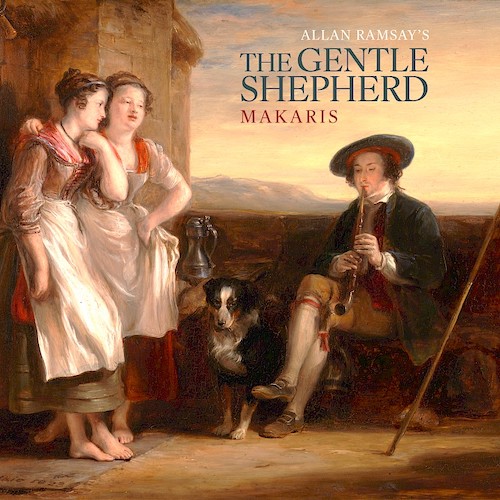
To this framework Makaris added instrumental interludes. More important, the group created arrangements featuring instruments that audiences would have heard in the poet’s time: bagpipes, recorders, harps, theorbo, harpsichord, and more. There is also some narration, as there would have been in the old days.
Without any single definitive score to work from, Makaris doesn’t claim this recording to be a recreation of what listeners would have heard in the early- to mid-1700s. Rather it’s an evocation of the sounds and musical tastes of the time. As such it’s a valuable document of Ramsay’s creativity and the development of his work over the decades that followed the opera’s genesis.
Shepherding a Forgotten Opera Back into the Spotlight
The work delighted audiences in Scotland and England for much of the 18th century. It can now delight us too, thanks to this realization. The story is a pastoral one of young love in an idealized Scottish countryside, taking place just after the restoration of the British monarchy. The CD booklet contains a full synopsis and lyrics.
The recording features fine vocals from Fiona Gillespie, Corey Shotwell, and Madeline Healey among others, along with a group of skilled instrumentalists. It’s a marvelous evocation of a long-gone era as well as a most unusual piece of art – and a pleasure to listen to from start to finish.
The Gentle Shepherd is out now on Olde Focus (i.e. New Focus, get it?) Recordings.