 Blogcritics The critical lens on today's culture & entertainment
Chamber music in a chamber, not a concert hall. Period instruments, seen and heard up close. In the first half of the 18th century, composers writing for ensembles of just four or five musicians generally expected their intimate music to be heard in a small-ish room, perhaps in a royal residence or stately home.
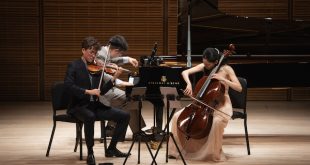
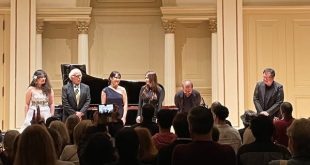
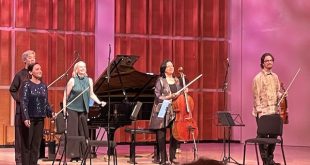
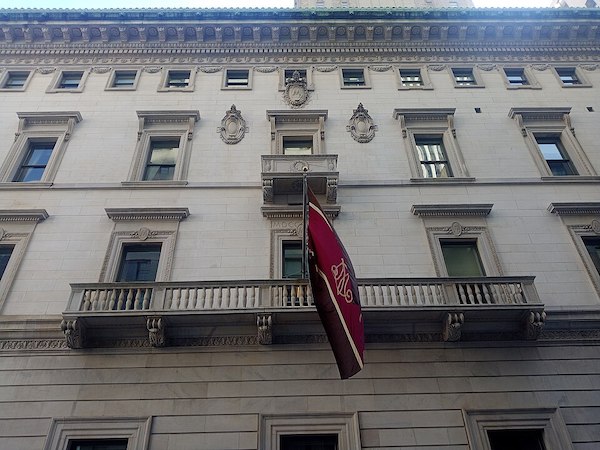
The music in the “Rococo Repast” program from the American Classical Orchestra (ACO) comes from this period and added up to just such a concert, as the ACO metaphorically stripped the “O” from its name for a chamber program September 18. The setting: not a home, but a stately Gilded Age holdover: New York City’s Metropolitan Club.
The music of this early classical “Rococo” period was in some ways a reaction against the contrapuntal and harmonic complexity of J.S. Bach. It was thought that listeners, whether in church or a secular setting, desired pleasing sounds that captivated the ear without challenging the mind too much. It’s why Bach’s sons’ music is so different, so much less monumentally brilliant, than that of the elder Bach, offering a more easygoing audience experience.
The Quintet in D Major, Op. 22 by Johann Christian Bach provides a good example. It calls for virtuosity, but the kind that delights rather than awes. This performance was also the occasion for the introduction of the orchestra’s new oboist, David Dickey.
The baroque oboe, like other “original” instruments (such as the natural horn), is harder to play than its modern descendant. Mr. Dickey displayed his ample skill, though the piece is more a showcase for the flute, played here with rich tonality and soft finesse by Melanie Williams. Violin, cello, and harpsichord rounded out the quintet, the last played by Dongsok Shin, who may be familiar to readers from his demonstrations on the Metropolitan Museum’s Schmidt Grand Piano from the 1790s. It was a treat to be able to hear the harpsichord clearly, as it’s so often “buried in the mix” with larger ensembles or on bigger stages.
The music of Michael Haydn, younger brother to the more famous Joseph, may be justifiably less celebrated than Papa Haydn’s, but it’s arguably too little-known. Scored for two violins, two violas, and cello, his Quintet in C Major, MH 187 was a pleasure to hear. The Adagio cantabile featured nicely articulated pizzicatos and violin-viola echoes. First violinist Aisslinn Nosky impressed with nimble elegance in the Allegro molto finale.
Nosky shone too in Mozart’s Flute Quartet No. 4 in A Major, K. 298. This quartet also, again, featured Williams with her baroque flute. It’s a rare original wind instrument (rather than a replica) with a warm sound that’s less airy than that of a modern flute. Williams especially elevated the Menuetto, but the whole Quartet was a delight to hear in the relatively intimate, salon-style setting.
As with the ACO’s orchestral concerts, music director Thomas Crawford led the musicians in excerpts before the full performances, to alert us of elements to listen for. This is always appreciated; I always learn something, and anyone paying attention at this concert likely learned a thing or two too, even as the musicians enveloped us in the pure joy of the sweet-sounding, often deeply inspired music of the Rococo period.