 Blogcritics The critical lens on today's culture & entertainment
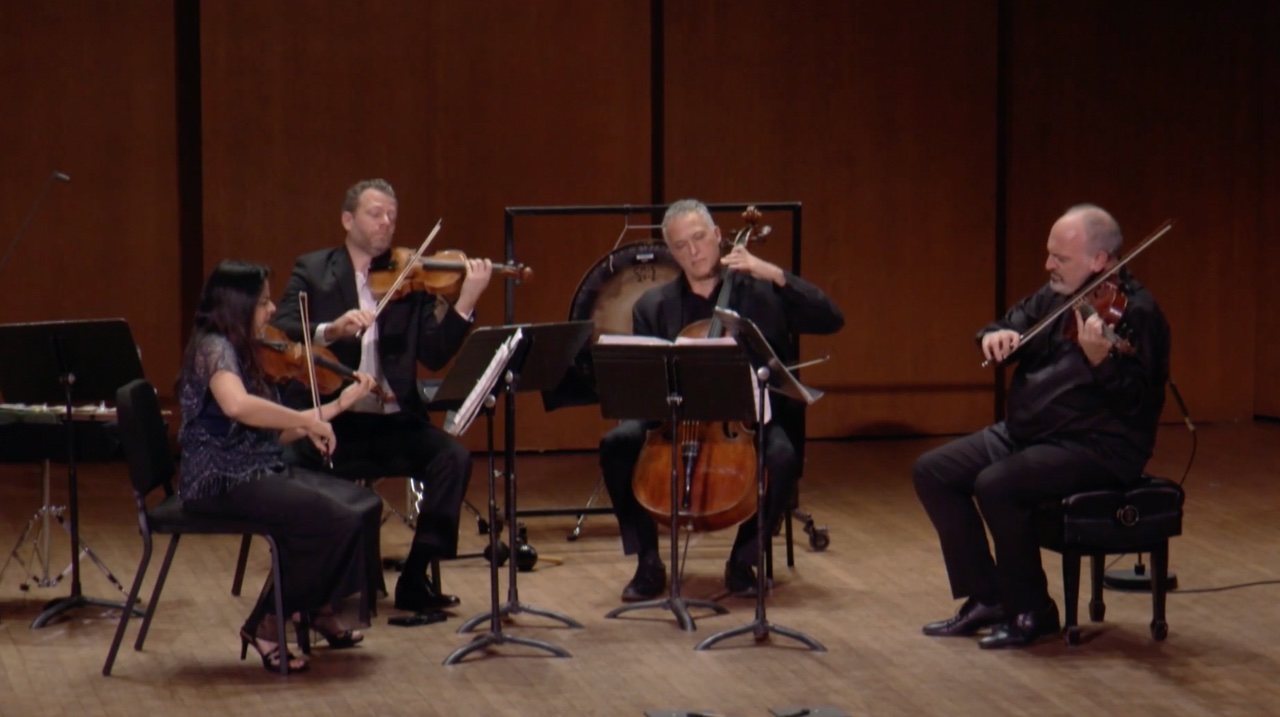
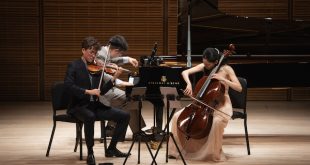
Something in the air at 92NY is messing with musicians right now. Two weeks ago in friendly Kaufmann Concert Hall, Dmitri Shostakovich caused an equipment malfunction forcing an interruption in the Junction Trio’s performance of the Piano Trio No. 2. (A repair was made, the concert resumed, and all was better than well.) Then, this past Wednesday on the same stage, cellist Brandon Vamos of the Grammy-winning Pacifica Quartet had to dash away to get a new bow in the midst of Samuel Barber’s String Quartet in B minor.
Fortunately we can count on professional artists to have the requisite skills and backup plans. No musicians and certainly no audience members were harmed in the making of these rousing concerts.
Samuel Barber and the ‘Adagio for Strings’
Some of those listeners probably didn’t know that the second movement of the B Minor Quartet contains the original version of the piece we will forever associate with Samuel Barber, the ubiquitous Adagio for Strings. The Molto adagio second movement, in its orchestral arrangement especially, became a touchstone for American public mourning.
We hear the string quartet version less often. In the Pacifica musicians’ performance, the piece’s poignancy and pathos – its originality, too – emerged in a more sinewy way right from that first naked, sustained violin note.
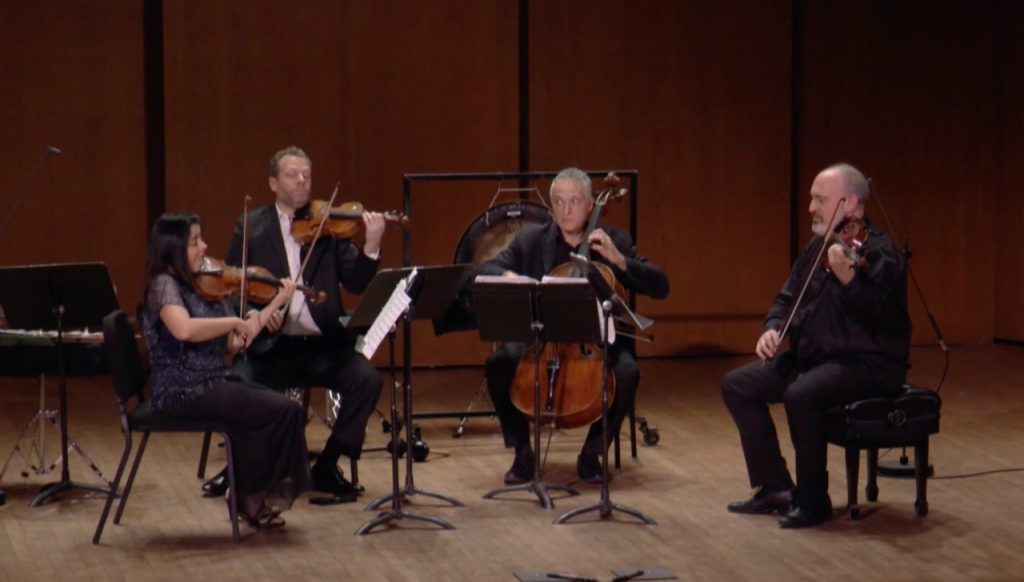
But it was in the first movement that we heard an even more insistent expression of Barber’s distinctive voice. Its recurring three-note figure, tight as can be, itched and snapped like a monstrous hallucination in a myriad of guises in this commanding performance, equipment failures be damned.
Later on, the foursome gave a credible account of Dvořák’s ever-popular String Quartet No. 12 “American.” It closed out (save for an encore) this USA-themed program titled “American Snapshots: JFK, Vietnam, and Ellis Island.” (I’m not sure where Ellis Island came in, or JFK for that matter, but that matters not.)
However, I had come primarily to hear the stinging avant-garde of George Crumb.
George Crumb and the Dark Angels of War
Black Angels: Thirteen Images from the Dark Land was Crumb’s response to the Vietnam War, which was raging in 1970 when he composed it. In the piece’s 13 miniatures the musicians amplify their instruments to create very non-standard effects. They put aside their stringed companions to bow arrays of wine glasses, generating eerie high tones. They bang and tickle percussion instruments, and use the bodies of their usual instruments as percussion devices. They shout numbers out loud.
Numerology is important to the piece conceptually, specifically the unlucky 13 and the significant seven. But there are few distinct pauses, and I don’t imagine Crumb expected listeners to be able to tease apart when one mini-piece ends and the next begins; I couldn’t. What I did note was the dizzying variety of sounds, effects, and moods. Furious, almost toneless horn-like trills; gong strikes, almost painfully loud; deliberate out-of-tuneness; even an interval of weird beauty.
The music sounded as fresh as I imagine it did 50-plus years ago, and the Pacifica Quartet made it as fun to watch as it was to hear. Indeed, this is the kind of music that’s much more enjoyable in person than on a recording.
Their Dvořák was flowing and warm, with subdued tension and a woodsy tone in the slow movement, the violins merging in happy harmony, with a rich reprise of the main theme from the cello. After the bright, dance-like third movement, the Finale coursed with energy and emerged as my favorite movement in this particular performance. For an encore, they gave us something new to me: one of Louis Gruenberg’s delectable Four Diversions for String Quartet, Op. 32.
The Pacifica Quartet on the Road
Live performances of brand-new music are everywhere, at least in big cultural centers like New York City. We get revivals of the “classic” avant-garde less often. All hail the Pacifica Quartet for staging Black Angels, the product of one anguished time, as we sail into another. They have further performances of Barber and Crumb and more on their tour schedule; go see them if you can.