 Blogcritics The critical lens on today's culture & entertainment
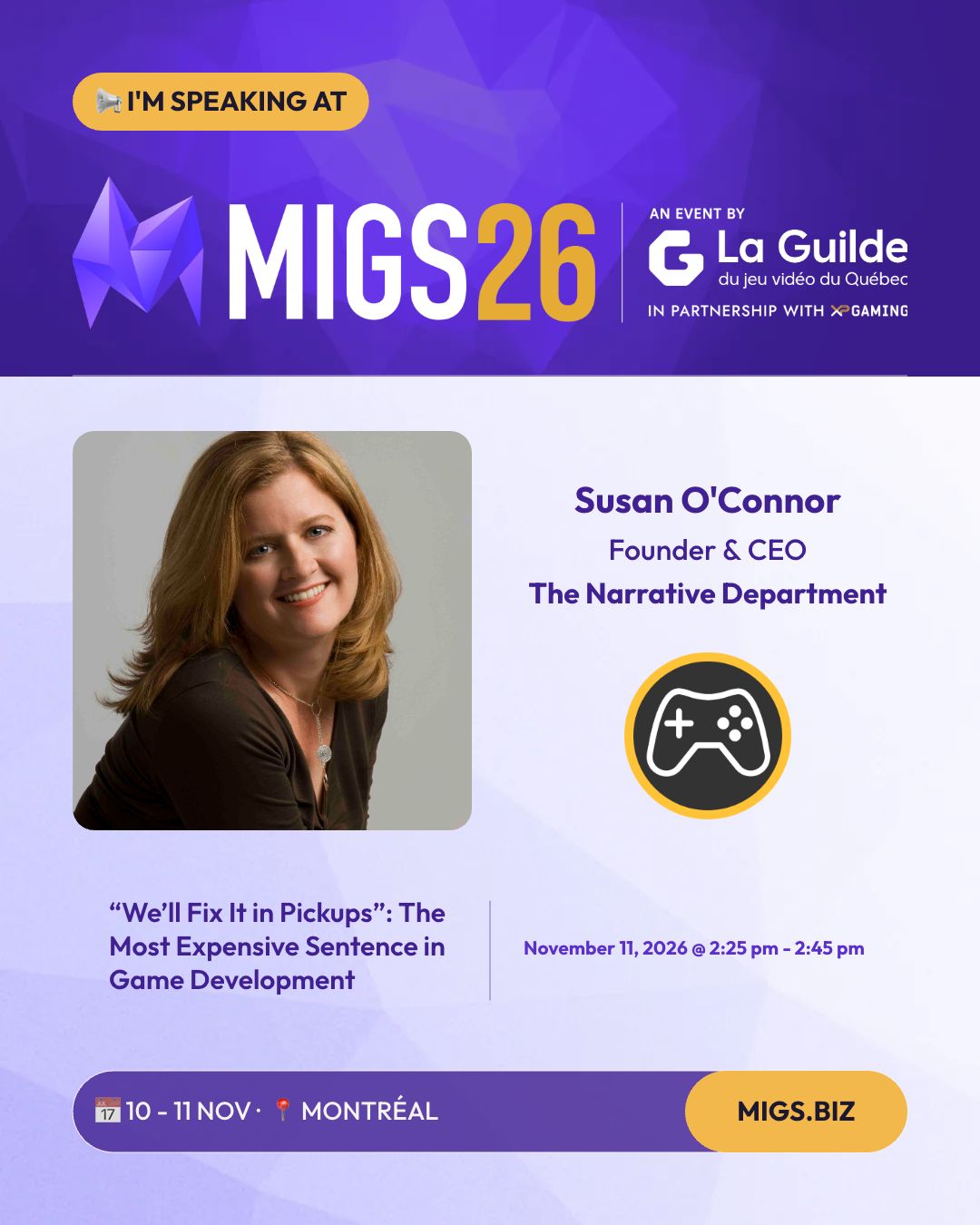
As North America’s premier B2B game development conference, the Montreal International Game Summit (MIGS) is an essential gathering ground for industry leaders, executives, and creative minds to connect and examine the evolving craft of interactive storytelling.
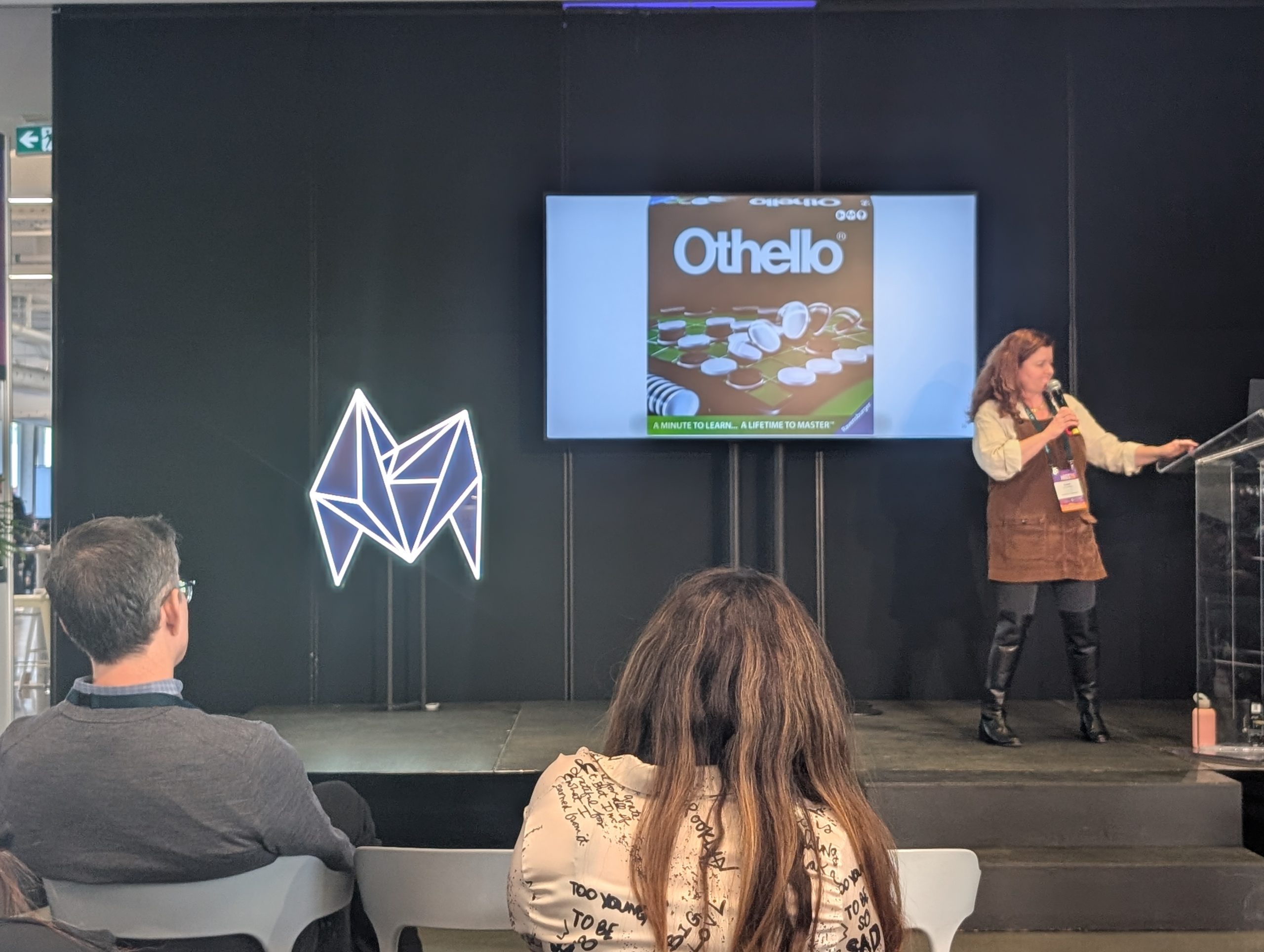
The summit provides an invaluable venue for dissecting why projects succeed and where they derail. Award-winning writer and The Narrative Department founder Susan O’Connor delivered one of the most candid sessions of the conference: “We’ll Fix It in Pickups: The Most Expensive Sentence in Game Development.”
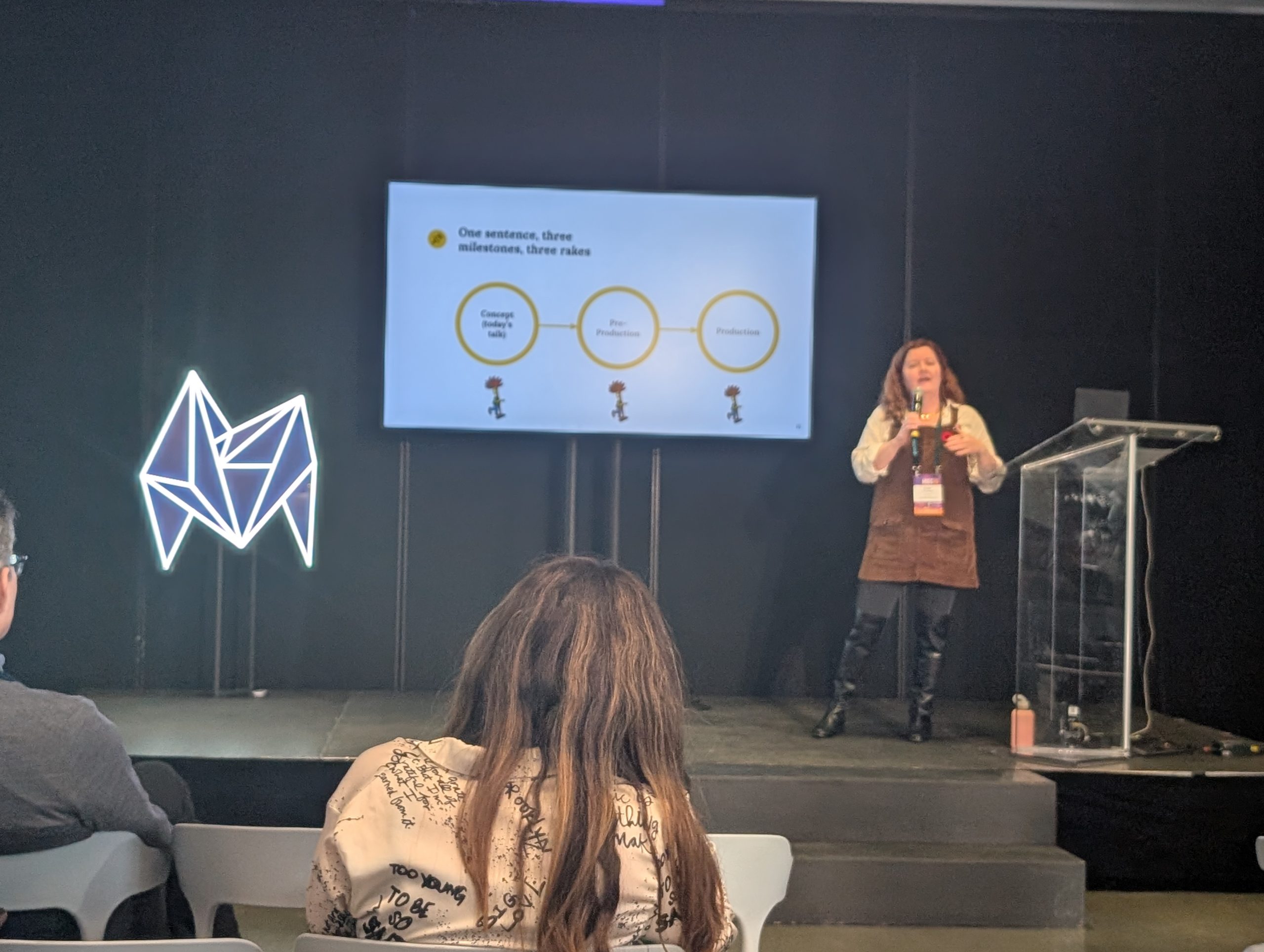
As a follow-up to her talk, I sat down with Susan for an exclusive, wide-ranging conversation about her legendary career, from early interactive CD-ROMs to genre defining titles like BioShock and Gears of War, and how she now steps in as an industry “cleaner” to rescue troubled narrative pipelines before catastrophe strikes.
From Slumber Party Games to AAA Masterpieces
Susan’s entry into the gaming industry came in the mid-1990s on an interactive, cartoon-style CD-ROM game.
My first job was writing for a game on CD-ROM. It was a slumber-party game for girls… It was four little girls on screen and they were talking the whole time, like, ‘Oh my god, Bobby’s so cute! Can I brush your hair?’ Anyway, I had been to slumber parties, so I was a subject matter expert.
After weathering the burst of the dot-com bubble, Susan rode the wave of the console boom, contributing narrative work to industry-defining hits like the original Gears of War and BioShock, alongside Tomb Raider and various Star Wars projects. But after two decades of working inside studios, she wanted to pivot. As narrative became deeply integrated into gameplay mechanics, the traditional freelance model – of dropping in to write a script, and leaving – vanished. This realization led her to found The Narrative Department, where she now trains game writers, runs cross-disciplinary masterclasses, and consults directly with studios to get derailed projects back on track.
The Biggest Narrative Trap: Laying Story Landmines Early
During our chat, Susan expanded on the core warning of her MIGS 2026 panel: Narrative landmines that explode late in production are almost always planted early by people who aren’t even thinking about story.
A lot of games, the question they usually don’t ask is, ‘Well, who’s the hero of the story? Who’s driving the story?’ And the reason no one asks it is that they’re like, ‘Oh, it’s the player. Why are we even asking this stupid question? Move on.’ But it’s really hard to make a story around the player… The options for who your hero is: it’s either the avatar—who is not the player, they’re two different people—or it’s an NPC.
Reflecting on her work on BioShock, she noted that while the game won countless awards and features one of the greatest plot twists in gaming history, the player’s personal story is actually a classic, linear vehicle driven entirely by the intense, competing desires of NPCs like Andrew Ryan.
Listen to the Full Interview
Bridging the Gap Between Writers and Designers
One of the most persistent hurdles in game development is the historic disconnect between what writers envision and what designers build. Writers often spend months crafting rich, continuous narrative arcs, only to hand them over to developers who are busy trying to solve pacing problems, spacing out hours of gameplay where the story takes a back seat.
This friction often leads to a false sense of failure for writers who try to force a traditional, linear script onto an interactive medium where players demand immediate agency. Reflecting on her evolution in the industry and the painful lessons learned trying to bridge that gap, Susan admitted:
I used to think the problem was I just wasn’t a good enough writer. And then I eventually realized Shakespeare himself couldn’t make this happen, because you can’t think about only [story].
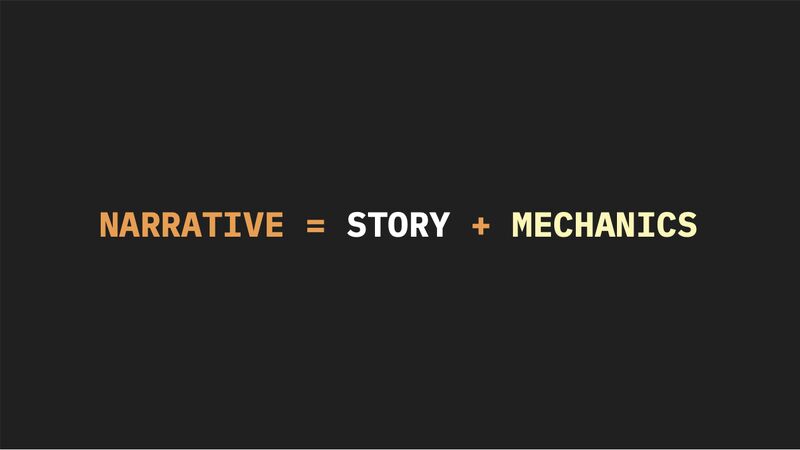
The underlying reality is that no matter how brilliant the prose or how profound the dialogue, a game’s narrative cannot exist in a vacuum. True narrative integration requires understanding that players interact with games through immediate mechanical engagement, meaning the story has to be built to bend around the gameplay experience rather than demanding the player stop to listen.
Aligning Core Loops with the Narrative Stack
When asked how indie and mid-sized studios can prevent gameplay loops and narrative from violently clashing, Susan shared an invaluable structural framework she learned from game designer Jesse Schell:
- Player Fantasy: The absolute rock-solid foundation (e.g., “I’m Batman” or “I’m Spider-Man”)
- Verbs & Actions: The core mechanics that directly support that fantasy (e.g., web-slinging or combat)
- Progress and Economy: Rewarding actions that reinforce the core loop
- World: The physical space that fits the fantasy (e.g., tall buildings and criminals for Spider-Man)
- Story: The narrative wrapper that binds it all together
Susan stressed that this stack moves from least flexible to most flexible. As long as your story supports the rest of the stack, any story will work, freeing writers to adapt when designers inevitably cut levels or change mechanics during production.
Be sure to check out our coverage of other standout MIGS 2026 panels and keep an eye out for Interviews with Steve Szczepkowski from Eidos-Montréal and Sandra Smedegaard Mondahl from IO Interactive coming soon.