 Blogcritics The critical lens on today's culture & entertainment
Some years ago, I heard pianist Ching-Yun Hu play the premiere of a piece by composer Jeremy Gill based on a Bach cantata. I wrote that the performance “verged on the epic.”
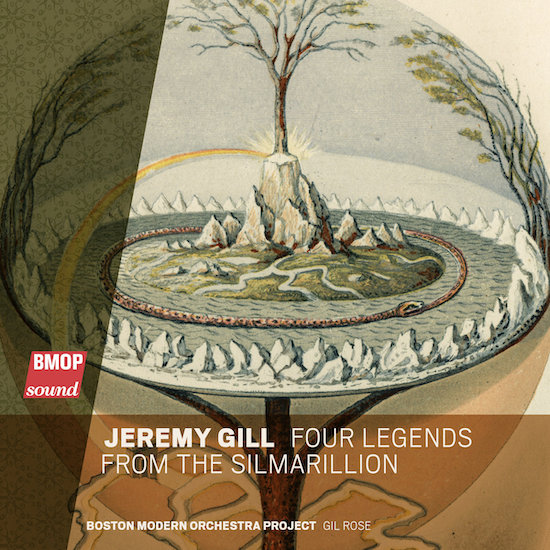
In his four-movement, album-length work Four Legends from the Silmarillion, Gill goes full-on epic.
The Silmarillion
I remember the excitement when The Silmarillion came out in 1977. I was a 14-year-old who’d been steeped in J.R.R. Tolkien ever since my father read The Hobbit to my brother and me as an ongoing bedtime story when we were five and seven years old respectively. By ’77 – an epic fantasy year indeed, with the premiere of Star Wars – I’d already read The Lord of the Rings a few times.
So I also remember my muted disappointment in the new book. Rather than another rip-roaring fantasy adventure, it is a set of, as Wikipedia calls them, “mythopoetic works” recounting various legends of Middle Earth, told, in my memory, as from a great height.
Jeremy Gill came to Tolkien later in life than I did. No doubt he was better able to appreciate the merits of The Silmarillion as an adult than I was at 14. The result: The lore of Tolkien’s Middle Earth directly inspired these four symphonic tone poems by this culturally wide-awake composer and masterful orchestrator.
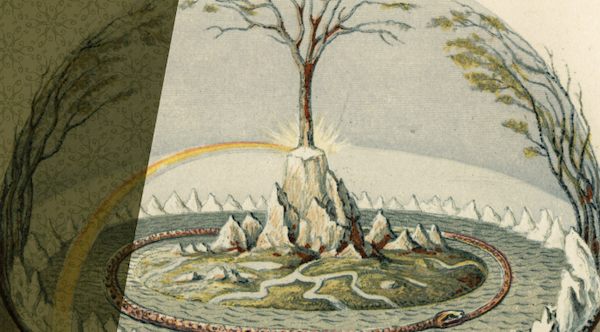
The sequence begins with Tolkein’s creation myth, “Ainulindalë.” Gill’s musical evocation of this story was a commission composed initially as a standalone set of theme and variations. It premiered in 2018. The piece gets going with a grand theme established by Tolkien’s supreme being. The theme is expanded and exploited in variations evoking the four traditional elements of earth, air, fire, and water, in the persons of their ruling deities. The music unfolds in a series of exciting episodes culminating in a grand – indeed an epic – battle.
A few years after the piece’s premiere, Gil Rose of the Boston Modern Orchestra Project (BMOP) commissioned Gill to write three more to complete a set.
Reading Along
The first of these, “Narsilion,” plunges us right back into Silmarillion mythology. A flute conjures the Two Trees of Valinor, from which ultimately spring the sun and the moon. As the trees flower, there is a powerfully abrupt transition from pandiatonic scales – using only the notes that on a piano would be the white keys – to a more colorful chromaticism.
The composer’s liner notes lay out how the music delineates the events. Usually I’m loathe to recommend listeners refer to written words in order to understand a piece of music. But in this case it’s actually fun to follow the narrative as you listen, at least the first time. As you do, you come to appreciate more and more Gill’s skill at painting pictures with the orchestra. One example: The stabbings of the defenseless trees by the evil giant spider Ungoliant in the 10th minute hits home.

“Tinúviel,” the most episodic movement, documents the quest of the human Beren to win the hand of the elf Lúthien by stealing a jewel (the Silmaril) from the crown of Morgoth – a kind of reverse parallel to the quest in the Lord of the Rings to destroy the One Ring. The musical episodes illustrate the pair’s adventures and perils. Beren’s touching song of farewell, to the strumming of a harp, is the softest of these dramatic set pieces.
A monophonic hunting call illustrates Beren’s pursuit by a hound after the theft. The funeral music that follows is tinged with hope – hope eventually realized when Lúthien agrees to become mortal in return for Beren’s restoration to life, signaled by consonant chords at the movement’s close.
Storytelling in Sound
The collapse of a lullaby into a depiction of the destruction of a city is an especially powerful moment in the dramatic final movement, “Eärendil.” There’s perceptible seasickness in the sailing music that comes a bit later. Gill paints effective sound pictures in this movement as he does throughout the work.
With its storytelling focus, Jeremy Gill’s new opus rightly tempts one to use the word “cinematic,” though that’s a bit cheap. The music owes a debt to Sibelius and the tradition of the tone poem, and is akin also to modern and contemporary film scoring. It also lives in the stream of classical and modern music, as when, in “Tinúviel,” it references Rameau and Milton Babbitt to mark the distinction between human and elf.
Will Four Legends from the Silmarillion prompt me to give The Silmarillion another read? Probably not. Did it propel me back into Tolkien’s fantastical universe? It sure did. Four Legends from the Silmarillion by Jeremy Gill is available now on BMOP/sound.