 Blogcritics The critical lens on today's culture & entertainment
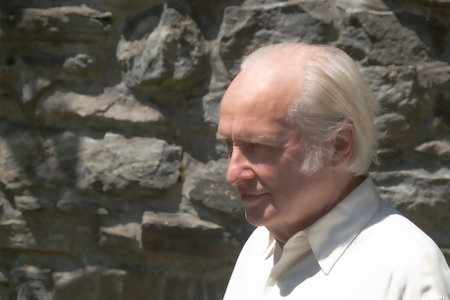
Composer Nils Vigeland has had a deep relationship with the piano throughout his career. In 2013 he retired as Chair of the Composition Department at Manhattan School of Music after having taught there for three decades. A new release on New Focus Recordings, Perfect Happiness, compiles almost that many years (29) of Vigeland’s piano music.
The composer writes in the liner notes that it was his discovery of Debussy, Ives, Schönberg and Stravinsky that propelled him toward composition. One can hear echoes of all their music from a century ago in these nonetheless highly distinctive works.
The Piano: An Instrument Unlike Any Other
Talking about the heyday of those progenitors, Vigeland makes an interesting observation: “While the erasure of the distinction between harmonic and non-harmonic tones in the first two decades of the twentieth century has many sources, the role of the piano in this development is significant.” I had never thought about that, but it makes a lot of sense, and it’s because of the nature of the instrument, specifically the natural decay of each note played and the effects of the pedals.
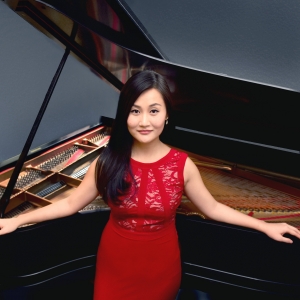
In all these works, performed magnificently by Jing Yang, Vigeland makes conscious and effective use of the piano’s acoustical properties to create sound worlds that couldn’t exist in the same way if played by orchestral instruments.
The survey opens with his Piano Sonata, whose composition extended over the aforementioned 29 years. The first movement, written in 1979, has as its first theme a four-note sequence that’s right in the heart of the standard major-key scale. As the music develops he introduces many chromatic passages and other non-diatonic intervals and combinations. But despite its many surprises both rhythmic and harmonic, its clusters and dissonances, the music is highly intelligible to any curious listener, suggestive and even humorous. (To wit: numerous Debussy-like runs, and halfway through, what sounds like a reference to “Chopsticks.”)
Pay attention to the use of the sostenuto pedal in the eighth minute and beyond: Vigeland is a master mechanic of the piano. But technicalities aside, the piece feels quite joyful to me; I could listen many times.
Vigeland added the second and third movements only in 2008. The slow middle movement is partly pastoral, but it includes a fiery B section. With uneven rhythms, the music has initially a wandering quality, but quickly establishes its own logic.
Eerie repeated high notes herald the final movement, sounding almost like a different instrument – a glockenspiel, perhaps – thanks to those pedals and Yang’s sensitive playing. The harmonic sense in the body of the movement recalls, again, Debussy, but with a distinctive melodic touch, while the quick repeating tones and mini-motives give the movement a dreamy quality à la Ravel. The effect is both gorgeous and dramatic.
Waltzing Toward Happiness
Each of a set of nine waltzes and one ecossaise, modeled after Schubert’s dance collections, has its own energy and mood. Many under one minute, they have designations ranging from “Appassionata” to “Capricciosa” to (strangely) “Inutile.” They’re fun, with sometimes a tongue-in-cheek flavor, but also delicately, artistically fashioned. The feeling is that not a single unnecessary note is present. And their historical resonance gives them weight.
“Mnemosyne,” a dualistic portrait of Vigeland’s erstwhile champion and piano teacher Yvar Mikhashoff, moves in the space of five evocative minutes from contemplative to active, with French influences and suggestions of jazz.
As the composer said in a recent interview, “What distinguishes music is not the tonal material, it’s the way you go from one thing to another, the art of transition.”
The album closes with “Perfect Happiness,” four short movements depicting a range of emotions. A long series of chords and tone clusters in the final movement, one of the more remarkable elements of the album, careens between harmonic and dissonant in halting rhythms, similar to what we hear in the second movement of the Sonata. This irregular attack evolves when the sustain pedal, absent for many minutes, finally makes an appearance to introduce a kind of peaceful reckoning.
Jing Yang’s playing shines on every moment of this album. As Vigeland, a concert pianist himself, said in the above-linked interview, he was delighted, having realized he wasn’t “as agile as I was 45 years ago,” to connect with Yang for the project, and admits he couldn’t have played this music today as well as she can.
But pianists have been interpreting his music for decades – Mikhashoff early in Vigeland’s career, Jenny Q Chai on 2014’s Life Sketches – and not because they wish to do the composer a favor. It’s because it’s vital music, frightfully interesting and eminently listenable.
Perfect Happiness: Piano Music of Nils Vigeland is out now on New Focus Recordings.
Note: In the abovementioned interview Vigeland lamented the lack of celebration of Charles Ives’ 150th birth anniversary last year. If Vigeland is reading this, I’ll venture to draw his attention to just such a celebration from Bard College and The Orchestra Now. While it wasn’t the New York Philharmonic, it did alight in New York City before a very appreciative audience.