 Blogcritics The critical lens on today's culture & entertainment
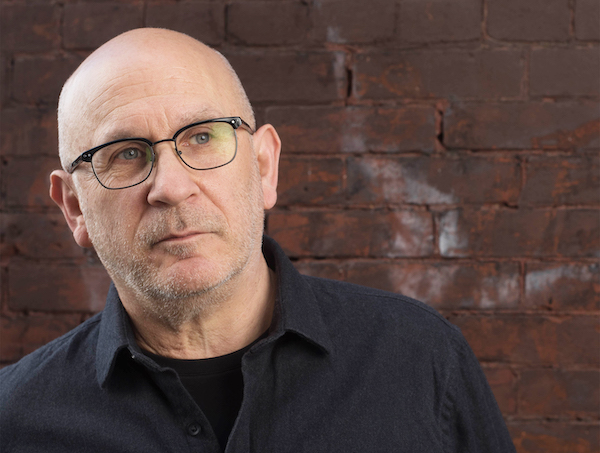
Our profile series of the 2028 Azrieli Music Prize (AMP) winners continues today with our interview with Mathew Rosenblum, the Azrieli Commission for Jewish Music laureate for 2028.
The AMP commissions recognize composers of distinction and give them resources and a platform “to create music of enduring value.” Laureates may be decades into distinguished careers, like Canadian Music Commission recipient Linda Bouchard (profiled here), or at earlier stages of their journeys, like Luis Arias, who was awarded the Commission for International Music. Today’s focus, Mathew Rosenblum, is a distinguished composer who will be fulfilling the 2028 Azrieli Commission for Jewish Music. He spoke to me about his work, his background, and Tamim (Simplicity), the work he will be creating for the new commission. It’s an installment of a larger oral history project he has undertaken.
The Azrieli Commission for Jewish Music asks composers to engage with the question, “What is Jewish music?” It’s awarded to “the composer who displays the utmost creativity, artistry, technical mastery and professional expertise in their response.” Certainly Rosenblum’s use of recordings of his grandmother talking and singing folk songs represents one deeply felt answer.
My own questions for Rosenblum, and his answers, follow.
Would you place Tamim for us in the context of the previous two works in your oral history project? And will this complete the project, or will there be further installments?
All three of the works in the series use recordings of my grandmother’s voice singing Ukrainian, Yiddish and Russian folk songs and telling the story of her escape from the massacre in Proskurov, Ukraine in 1919 with six children and while pregnant with my mother.
All of the works tackle topics such as migration, loss, memory, and cultural transformation.
The first piece, Lament/Witches’ Sabbath, a clarinet concerto written for David Krakauer and the Boston Modern Orchestra Project and supported by a Guggenheim Fellowship, blends Ukrainian and Jewish lament field recordings together with my grandmother’s voice and references Berlioz’s “Witches’ Sabbath” movement from [Berlioz’s] Symphonie Fantastique.
The Ukrainian and Jewish lament field recordings are reminiscent of the way my grandmother once told us this story after gathering the grandchildren after a Passover seder. Fear and superstition (represented in the Berlioz) are elements that drive people apart, laments bring people together; the various Ukrainian and Jewish laments presented in the piece are in sympathy with each other.
The second work in the series, We Lived Happily During the War, commissioned by the Fromm Foundation at Harvard, is a multi-movement piece for soprano and six percussionists and was originally intended to reflect the isolation and pain of the 2020 pandemic.
Inspired by the poem of the same name by the Ukrainian American poet Ilya Kaminsky, the piece uses multiple texts. Movement two incorporates a recording of my grandmother singing the Yiddish song “Ikh lakh fin dir, az Got iz mit mir!” (I’m laughing at you, for God is with me) shadowed by the singer. It symbolizes courage and perseverance and is a direct reference to my family’s escape from Ukraine, which happened during the last pandemic in 1919. This piece, and the Kaminsky poem, took on a devastating new meaning in light of the Russian invasion of Ukraine in 2022.
Tamim (Simplicity) will be the third work in the series. The major difference in this piece is that the samples of my grandmother’s voice will be treated as sonic artifacts emblematic of the simplicity and joy of the life and culture that was left behind. The piece will also consider the sheer sound of the language and the grain of the recorded voice.
By continuing to tell my family’s story of escape, loss, and cultural memory, the hope is that it will create empathy for those who are in similar circumstances today. It is hard to know if this will be the last piece in the series, but my sense is that it will.
Aside from your grandmother singing folk songs, did you come from a musical family, and if so, how did that contribute to the development of your career in music?
I didn’t come from a musical family, but even though my parents weren’t musical they were extremely supportive of my musical aspirations from an early age. When I attended the New England Conservatory of Music there was no “Plan B” ever discussed.
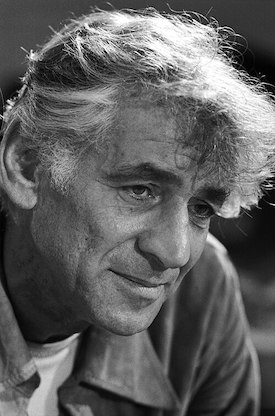
I did have an aunt who was a big opera fan, and she took me to one of Leonard Bernstein’s famous Young People’s Concerts at Carnegie Hall when I was four or five years old. I remember it vividly, sitting in the first row of the balcony leaning over the railing and listening intensely. It was a formative moment.
Has cultural history, and specifically Jewish history, always been important to your work?
No – however, many of my works have been inspired by my family. The discovery of the tape of my grandmother, recorded by my aunt Nettie Price, was a turning point. It wasn’t until I had lunch with my high school friend, the amazing composer/klezmer clarinetist David Krakauer in 2016, that I started to think deeply about blending my musical approach with David’s, and that Jewish music became important to my work.
It was at that meeting that we decided to create a project that revolved around my grandmother’s story.
In addition to being Professor Emeritus and former Chair of the Department of Music at the University of Pittsburgh, and co-director of the biennial Music on the Edge new music series, you are the founder of the Beyond: Microtonal Music Festival. How did you become interested in microtonality?
I was a teaching assistant for the late microtonal composer Ezra Sims for one semester as an undergraduate at the New England Conservatory of Music. Ezra became a friend and mentor to me and offered feedback on my microtonal imaginings for many years.
Additionally, as a graduate student at Princeton, I researched and transcribed Javanese vocal music and Persian ney music for the late ethnomusicologist Harold Powers and this provided further insights into other approaches to tuning.
When I lived in the East Village of Manhattan during the ’80s there were a lot of artists working with microtonality and I was fortunate to hear several performances of the monumental five-hour microtonal work “The Well-Tuned Piano” by LaMonte Young, as well as performances by Glenn Branca, and the band Sonic Youth, all of which were very influential as I increasingly incorporated altered tunings into my work.
Am I right in detecting a kinship between microtonality and the use of percussion, which is often present in your work? And what about microtonality in relation to your interest in “the sound and rhythm of language”?
Yes, percussion and the sound shape of language are both closely tied to my use of microtonality.
An early work, Circadian Rhythms, uses a 19-note keyboard tuning that I developed, amplified cello, and a percussion setup that incorporates 24 almglocken (Swiss cowbells). The cowbells are slightly out of tune, providing a fuzzy pitch center that blends well with the altered keyboard tuning.
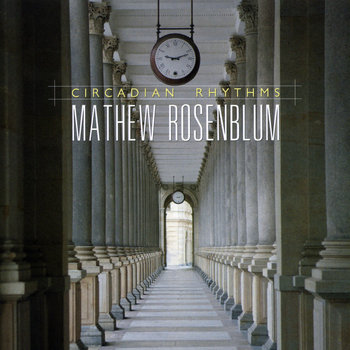
I also had custom-tuned pipes made that I’ve used in several pieces, including the work We Lived Happily During the War.
The sound and rhythm of language as well as the fine phonic differences between languages has interested me for years and has developed alongside my interest in microtonality. An example of one impacting the other is Lament/Witches’ Sabbath. The recorded Ukrainian lament that starts the piece begins on a quarter-tone flat D that over the course of two minutes slowly drifts upward to an Eb. This subtle tonal shift is reflected in the orchestral accompaniment as well as in the keyboard part that uses an altered tuning.
If it’s possible without getting too technical, can you explain how you “create tuning systems that fuse the normal 12 notes with added notes derived from the natural overtone series”?
I’m interested in creating hybrid tuning systems that use the standard 12-note equal tempered system combined with other tuning systems such as the 19-note equal division of the octave tuning or a 21-note system that combines the equal tempered 12 notes with nine altered notes that form natural intervals with each other (derived from the overtone series) and with notes from the standard 12. These strategies provide a wide variety of intervallic and harmonic possibilities and allow for strong harmonic and stylistic contrasts within each work.
The AMP prize package is Canada’s top music composition competition and one of the world’s largest, now valued at CAD 250,000 per laureate. It includes a cash award, a performance of the work by Le Nouvel Ensemble Moderne (Le NEM) at the AMP Gala Concert in autumn 2028, two subsequent international performances, and a commercial studio recording of the work (also featuring Le NEM). What does it mean to you to have received the Azrieli Commission for Jewish Music?
It is a great honor. The support that this commission offers, from composition to international performances and recording, is unlike any other that I am aware of. I am particularly grateful for the platform to tell my family’s story, a story of migration, loss, memory and cultural transformation, from yet a different perspective.